Product Search
Find the right transformer for your needs
String Grid-tie Inverters
2 Product Series · 18 Models available
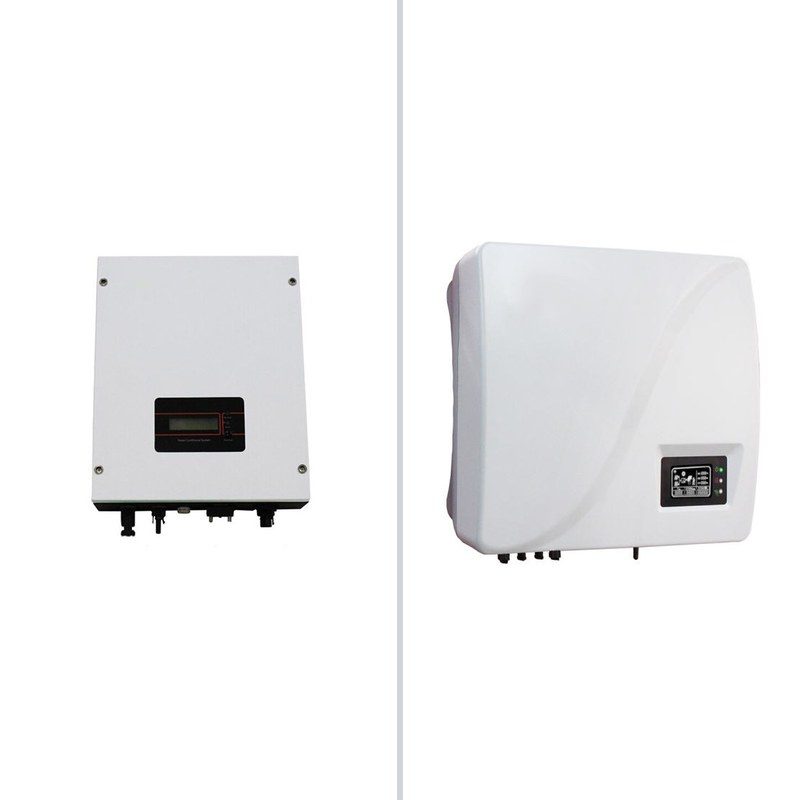
String grid-tie inverters turn the DC output of PV modules into grid-synchronised AC. QDTB string inverters cover 3 kW to 250 kW in single- and three-phase frames, each with multiple independent MPPT trackers so differently oriented or partially shaded strings do not drag each other down. A wide DC input window, 1500 V maximum voltage support and peak efficiencies above 98 % keep energy yield high, while IP65/IP66 enclosures allow outdoor wall mounting beside the array. Built-in communication and monitoring ports make fleet-level operation straightforward for residential and commercial installations.
Specifications Range
All specifications and dimensions can be customized upon request
| Key parameters | Model Range |
|---|---|
| Rated Power | 3–250 kW |
| Max DC Voltage | 1100 V, 1500 V |
| MPPT Trackers | 2–12 |
| AC Voltage | 220 V, 380 V |
| Frequency (Hz) | 50 Hz |
| Max Efficiency | 97.5–99 % |
| Protection Level | IP65, IP66 |
Available Series
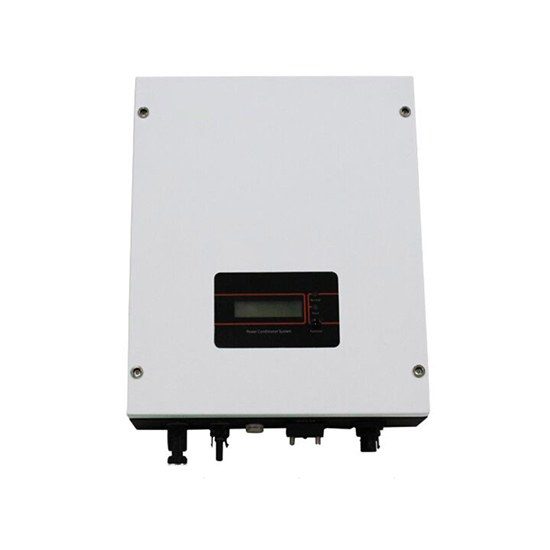
SI-1000
→SI-1000 Series — 1500 V Three-Phase String Inverters
The SI-1000 platform covers 3–36 kW three-phase inverters on a 1500 V DC architecture, reducing string count and cable losses for residential and small commercial arrays.
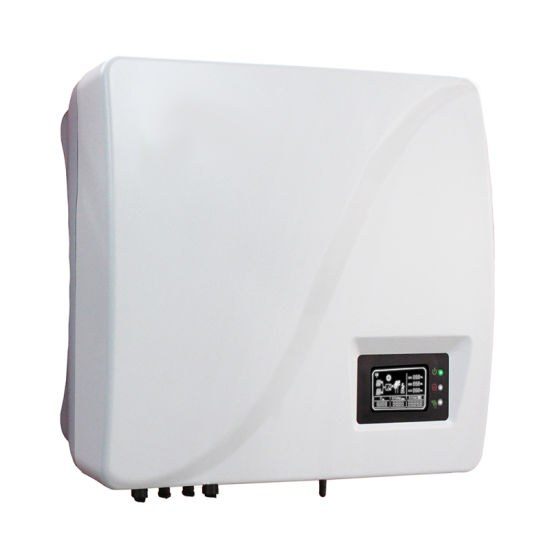
SI-1500
→SI-1500 Series — High-Power Commercial String Inverters
The SI-1500 platform scales to 110 kW for commercial and utility string applications, packing many MPPT channels and full grid-code compliance into a compact, serviceable cabinet.
Application Scenarios
Residential Grid-Tie
3–10 kW single-phase inverters sized to a household array, with smart monitoring for self-consumption.
Commercial Rooftops
20–110 kW three-phase units that aggregate multiple strings across large warehouse and factory roofs.
Partial-Shade Arrays
Multiple MPPT channels isolate shaded or east/west strings so each operates at its own maximum power point.
High-Voltage Systems
1500 V DC input designs that reduce string count, cable cross-section and DC losses for large plants.
Retrofit & Expansion
Scalable string architecture lets new strings be added incrementally without replacing existing inverters.
Harsh Outdoor Sites
Fanless or forced-cooled IP65/IP66 enclosures withstand rain, dust and coastal salt spray.
Technical Advantages
Multi-MPPT Design
Two to twelve independent trackers per unit maximise yield across mismatched orientations and shading.
98 %+ Peak Efficiency
High-frequency topologies and low-loss magnetics hold conversion loss below 2 %.
Wide DC Input Window
Broad MPPT voltage ranges accept short and long strings, simplifying system design.
Built-In Monitoring
WiFi, 4G and RS485 connectivity stream performance and fault data to local and cloud platforms.
Frequently Asked Questions
What is the difference between string and central inverters?
String inverters connect one or a few module strings per unit and offer granular MPPT and easy maintenance; central inverters aggregate hundreds of strings into one large unit for utility plants.
How many MPPT trackers do I need?
One tracker per orientation or shading group is ideal — east/west, pitched/veranda and partially shaded zones should each have their own MPPT.
Can I oversize the array relative to the inverter?
Yes, a DC-to-AC ratio around 1.1–1.3 is common and lets the inverter clip only briefly at peak while recovering energy in low light.
What protection class is suitable for outdoor mounting?
IP65 or IP66 enclosures are recommended for wall mounting outdoors; indoor units may use IP20.
Do your inverters support remote monitoring?
Yes, standard RS485 plus optional WiFi/4G modules feed real-time generation, voltage and fault data to a monitoring platform.
What capacity and voltage range is available for String Grid-tie Inverters?
QDTB® supplies String Grid-tie Inverters from 3 to 250 kW.
Instant Selection & Quote Calculator
Select your specifications to get an estimated price instantly.
More options(6)
Certification
Reference prices are for estimation only and do not constitute a formal offer.
3 · Get this quote
We will reply with your latest quote instantly.
Solar System Configurator
Size your solar array, storage and balance-of-system, and get an instant bill of materials.
Need help?
All specifications and dimensions can be customized upon request
Single-Phase vs Three-Phase String vs Central Inverter: How to Choose
| Single-Phase String | Three-Phase String | Central Inverter | |
|---|---|---|---|
| Typical size | Smallest frames, for residential arrays | Mid-size frames for commercial rooftops | Large frames for utility plants |
| MPPT granularity | Several trackers across the roof's orientations | Multiple trackers per unit, one per orientation group | Few trackers for the whole plant, so shading affects more |
| Mounting | Wall mounted beside the array, outdoors | Wall or rack mounted at the array | Container or station at the plant centre |
| Grid connection | Single-phase feed into the house or building board | Three-phase feed into the building or transformer | MV connection through a step-up transformer |
| Redundancy | A failed unit takes out one roof section | A failed unit takes out one part of the plant | A single failure can stop a large share of the plant |
| O&M | Swap a unit, no specialist crew needed | Swap or service on site with standard tools | Service contracts and spare modules on site |
| Typical application | Residential rooftops and small C&I | Commercial rooftops, carports and retrofit arrays | Utility-scale ground plants |
Where QDTB® String Inverters Are Specified
String inverters are specified wherever the array is split across orientations or subject to shade: residential rooftops, commercial roofs, carports and retrofit or expansion projects. One tracker per orientation or shading group is what stops a shaded string from dragging the rest of the array down.
On commercial rooftops the three-phase frames connect directly to the building board, and on high-voltage systems the 1500 V DC window lets longer strings run with less cable and fewer combiner boxes. A DC-to-AC ratio around 1.1-1.3 is normal, since the inverter only clips briefly at peak irradiance.
Harsh outdoor sites use the IP65/IP66 enclosures for wall mounting beside the array, with RS485 plus optional WiFi or 4G modules feeding generation, voltage and fault data back to a monitoring platform. That data is what turns a fleet of rooftops into something an operator can actually manage.
The range runs from 3 kW to 250 kW in single- and three-phase frames, with peak efficiencies above 98 %. Units are built to IEC 62109-1/-2 and IEC 61727, so the certificate pack covers both the safety and the grid-connection requirements.
Frequently Asked Questions
What is the difference between string and central inverters?
String inverters connect one or a few module strings per unit and offer granular MPPT and easy maintenance; central inverters aggregate hundreds of strings into one large unit for utility plants.
How many MPPT trackers do I need?
One tracker per orientation or shading group is ideal — east/west, pitched/veranda and partially shaded zones should each have their own MPPT.
Can I oversize the array relative to the inverter?
Yes, a DC-to-AC ratio around 1.1–1.3 is common and lets the inverter clip only briefly at peak while recovering energy in low light.
What protection class is suitable for outdoor mounting?
IP65 or IP66 enclosures are recommended for wall mounting outdoors; indoor units may use IP20.
Do your inverters support remote monitoring?
Yes, standard RS485 plus optional WiFi/4G modules feed real-time generation, voltage and fault data to a monitoring platform.
What capacity and voltage range is available for String Grid-tie Inverters?
QDTB® supplies String Grid-tie Inverters from 3 to 250 kW.