Product Search
Find the right transformer for your needs
PV Mounting Structures
3 Product Series · 6 Models available
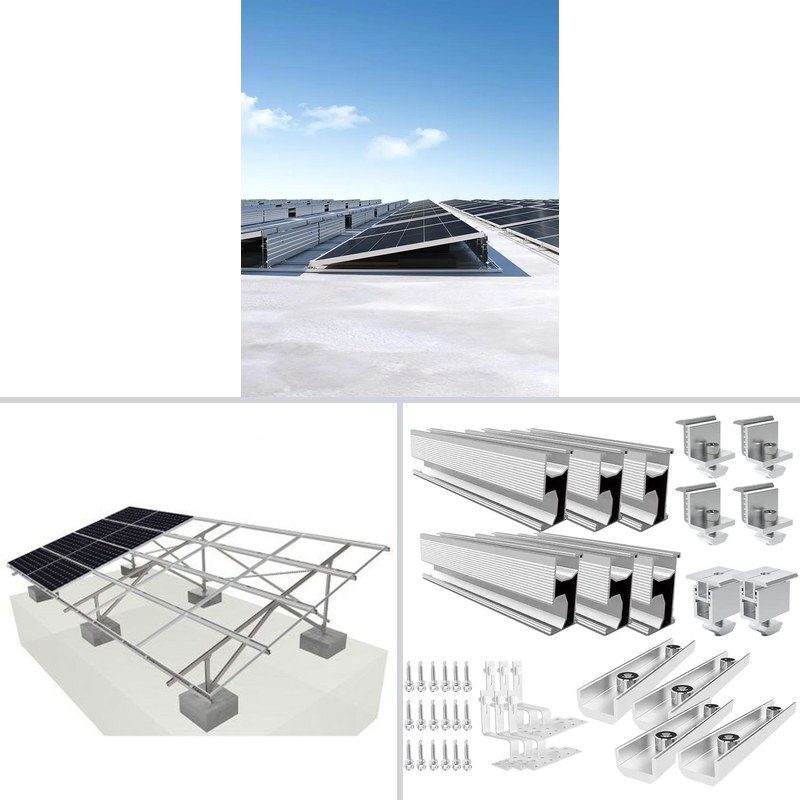
Mounting structures hold the array to the roof or ground for decades, so their strength and corrosion resistance determine the plant's lifetime. QDTB supplies aluminium and hot-dip galvanised steel systems for pitched roofs, flat roofs and ground installations, engineered to the wind and snow loads of the target site and matched to standard 1722×1134 mm and 2278×1134 mm modules. Pre-assembled components, adjustable tilt and a 25-year design life cut installation time and maintenance cost, while anodised and galvanised finishes resist salt spray, sand and industrial atmospheres.
Specifications Range
All specifications and dimensions can be customized upon request
| Key parameters | Model Range |
|---|---|
| Material | Aluminium alloy 6005-T5, Hot-dip galvanized steel Q355B, Hot-dip galvanized steel Q235B, Zinc-aluminium-magnesium (ZAM) steel |
| Install Method | Pitched-roof hook, Flat-roof ballast, Color-steel roof clamp, Ground pile foundation, Ground ballast |
| Wind Load | 40–48 m/s |
| Snow Load | 0.8–1.6 kN/m² |
| Design Life | 25 years |
Available Series
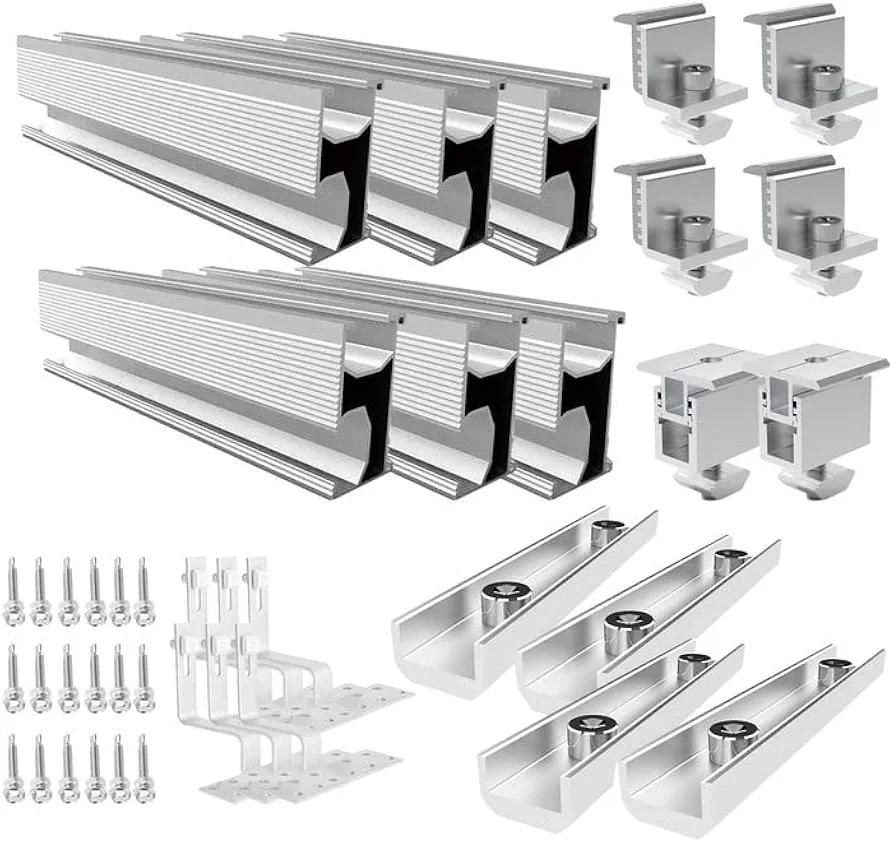
Pitched-roof
→Pitched-Roof Mounting — Hook & Rail Systems
Aluminium hook and rail systems fasten securely to rafters beneath tiles or shingles, keeping the roof watertight while holding modules at the optimum tilt.
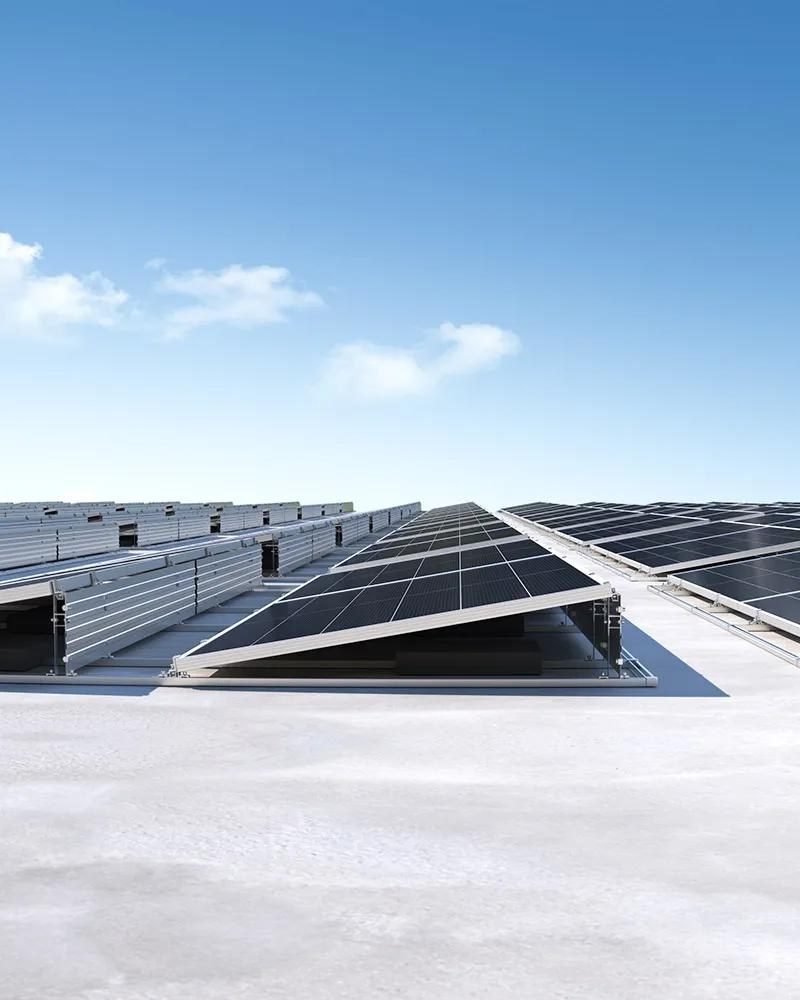
Flat-roof
→Flat-Roof Mounting — Ballasted & Anchored Frames
Ballasted or anchored tilting frames optimise module angle on flat commercial roofs, distributing load without penetrating the membrane where possible.
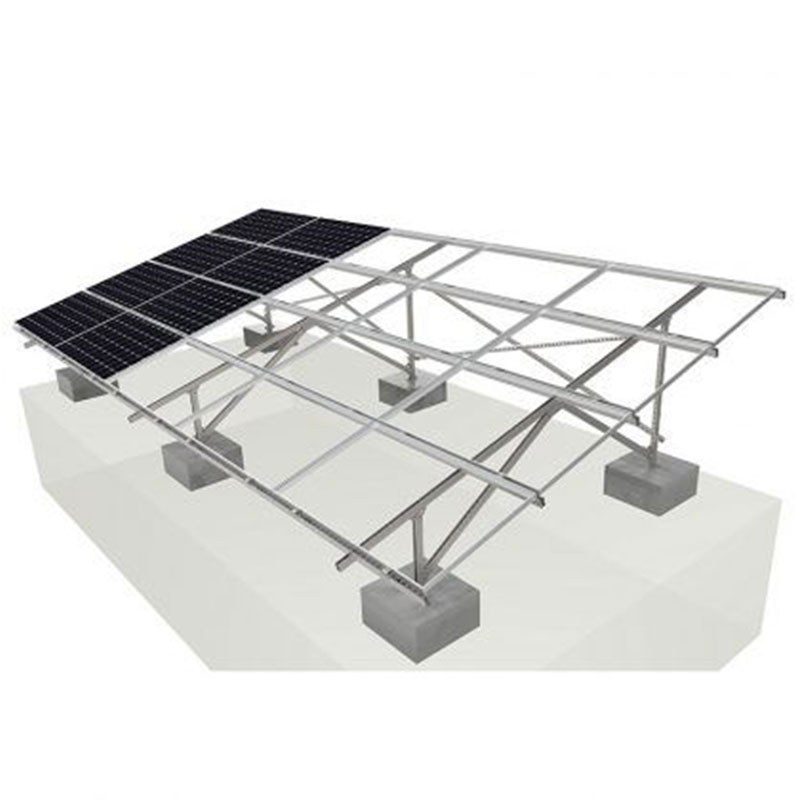
Ground
→Ground-Mount Structures — Driven & Concrete Systems
Galvanised steel ground structures for utility and distributed plants, with driven piles or concrete foundations and adjustable tilt for maximum yield.
Application Scenarios
Pitched Residential Roofs
Hook and rail systems that fasten securely to rafters without penetrating the waterproofing.
Flat Commercial Roofs
Ballasted or anchored tilting frames that optimise angle without heavy penetration.
Ground-Mount Plants
Driven or concrete-base structures for utility and distributed ground arrays.
Carports & Canopies
Elevated steel structures that turn parking into generation.
Coastal & High-Wind Sites
Corrosion-resistant alloys and reinforced sections for salt spray and typhoon zones.
Snow-Prone Regions
Steep-tilt, high-load designs that shed snow and hold rated snow loads safely.
Technical Advantages
Aluminium 6005-T5 & Galvanised Steel
Lightweight corrosion-resistant alloys and hot-dip galvanised steel for 25-year outdoor life.
Pre-Assembled Modules
Factory-preassembled components speed field installation and reduce labour.
Adjustable Tilt
Variable tilt angles optimise yield for the site's latitude and roof geometry.
Engineered Wind & Snow Ratings
Structures verified to site wind and snow loads per GB 50009 and EN 1991-1-4.
Frequently Asked Questions
Aluminium or galvanised steel — which should I choose?
Aluminium is light and corrosion-resistant, ideal for roofs; galvanised steel offers higher strength per cost for large ground and carport structures.
What tilt angle maximises yield?
Roughly the site's latitude for fixed mounts; adjustable systems allow seasonal re-tilting to capture more winter sun.
How is the structure fixed to a pitched roof?
Stainless hooks anchor to rafters under the tiles with rubber-sealed bases that keep the roof watertight.
What wind and snow loads can the systems hold?
Structures are engineered per site, typically rated for wind speeds of 40 m/s or more and snow loads of 0.8 kN/m² and above.
How long do the structures last?
Anodised and galvanised finishes are designed for a 25-year service life matching the modules.
What is the minimum order quantity (MOQ) for PV Mounting Structures?
One unit for standard products. Custom-designed equipment is quoted on specifications — send your parameters or drawings and our sales team will confirm the MOQ for your configuration.
Instant Selection & Quote Calculator
Select your specifications to get an estimated price instantly.
More options(5)
Certification
Reference prices are for estimation only and do not constitute a formal offer.
3 · Get this quote
We will reply with your latest quote instantly.
Solar System Configurator
Size your solar array, storage and balance-of-system, and get an instant bill of materials.
Need help?
All specifications and dimensions can be customized upon request
Aluminium vs Galvanised Steel vs Adjustable Tilt: How to Choose
| Aluminium (6005-T5) | Hot-Dip Galvanised Steel | Adjustable-Tilt System | |
|---|---|---|---|
| Weight | Light, so the roof structure carries less | Heavier per metre of rail | Light frame, plus the moving parts |
| Corrosion resistance | Anodised finish resists salt spray and humidity | Zinc coating protects the steel, with a longer maintenance horizon | Finish depends on the base material chosen |
| Strength | Adequate for roof spans and standard modules | Higher stiffness for long ground-mount spans | Braced for the extra load of a moving frame |
| Roof suitability | Preferred on pitched and flat commercial roofs | Used where the roof can take the extra weight | Flat roofs where seasonal re-tilting pays |
| Ground suitability | Small and medium ground arrays | Utility-scale ground plants and long spans | Ground arrays on sites with seasonal snow |
| Installation | Pre-assembled rails and clamps, bolted on site | Bolted or welded frames, heavier lifting | More components, so a longer installation |
| Typical application | Residential and C&I rooftops | Ground-mount plants, carports and canopies | Sites where yield gain justifies the frame |
Where QDTB® PV Mounting Structures Are Specified
Mounting structures are specified from the roof or the ground up: pitched residential roofs, flat commercial roofs, ground-mount plants, carports and canopies. The structure decides whether the array survives its design wind and snow load, so the engineering follows the site rather than a standard catalogue frame.
Coastal and high-wind sites take anodised aluminium or heavily galvanised steel, because salt spray and driven rain find every unprotected edge. Snow-prone regions specify the higher snow load rating and, on ground arrays, the extra tilt that lets snow slide off the lower rows.
Pre-assembled rails, clamps and hooks are what keep installation time down: on a pitched roof the stainless hooks anchor to the rafters under the tiles with sealed bases, so the roof membrane stays intact. On flat roofs and ground plants the ballast or pile pattern is set by the load calculation for that site.
Structures are engineered for wind speeds of 40 m/s or more and for the site's snow load, to GB 50009 and EN 1991-1-4. Adjustable tilt is specified where seasonal re-tilting earns more yield than the extra frame cost.
Frequently Asked Questions
Aluminium or galvanised steel — which should I choose?
Aluminium is light and corrosion-resistant, ideal for roofs; galvanised steel offers higher strength per cost for large ground and carport structures.
What tilt angle maximises yield?
Roughly the site's latitude for fixed mounts; adjustable systems allow seasonal re-tilting to capture more winter sun.
How is the structure fixed to a pitched roof?
Stainless hooks anchor to rafters under the tiles with rubber-sealed bases that keep the roof watertight.
What wind and snow loads can the systems hold?
Structures are engineered per site, typically rated for wind speeds of 40 m/s or more and snow loads of 0.8 kN/m² and above.
How long do the structures last?
Anodised and galvanised finishes are designed for a 25-year service life matching the modules.
What is the minimum order quantity (MOQ) for PV Mounting Structures?
One unit for standard products. Custom-designed equipment is quoted on specifications — send your parameters or drawings and our sales team will confirm the MOQ for your configuration.