Product Search
Find the right transformer for your needs
Cable Branch Boxes & Switching Stations
6 Series · 27 Models
Product Images
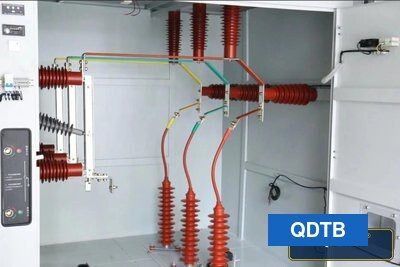
Images are for illustration purposes only
Cable Branch Boxes & Switching Stations Overview
Cable branch boxes are sealed distribution points that split a main cable into multiple outgoing branches without a full junction enclosure. QDTB units enable reliable branching of underground and urban networks from 0.4 to 25 kV and up to 630 A, rated per IEC 60502. Enclosures are weatherproof and corrosion-resistant for direct burial or pole mounting, with bolted, clamp, and plug-in terminations for 16-400 mm2 conductors. By reducing cable joints and simplifying fault location, branch boxes speed up network expansion and lower installation cost.
Available Series
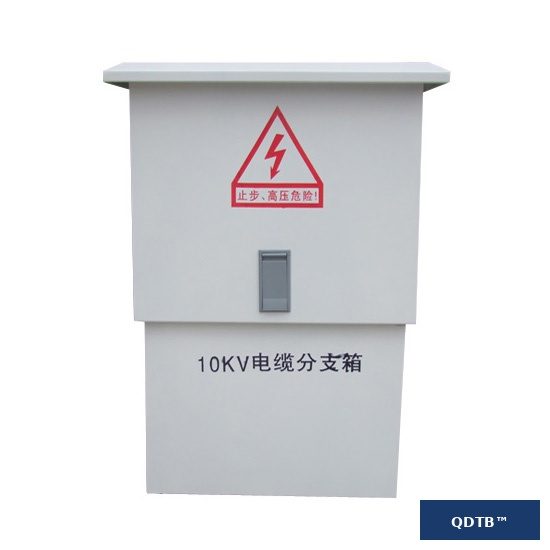
DFW Series
The DFW series represents cable branch boxes for power distribution, providing safe and reliable cable branching solutions.
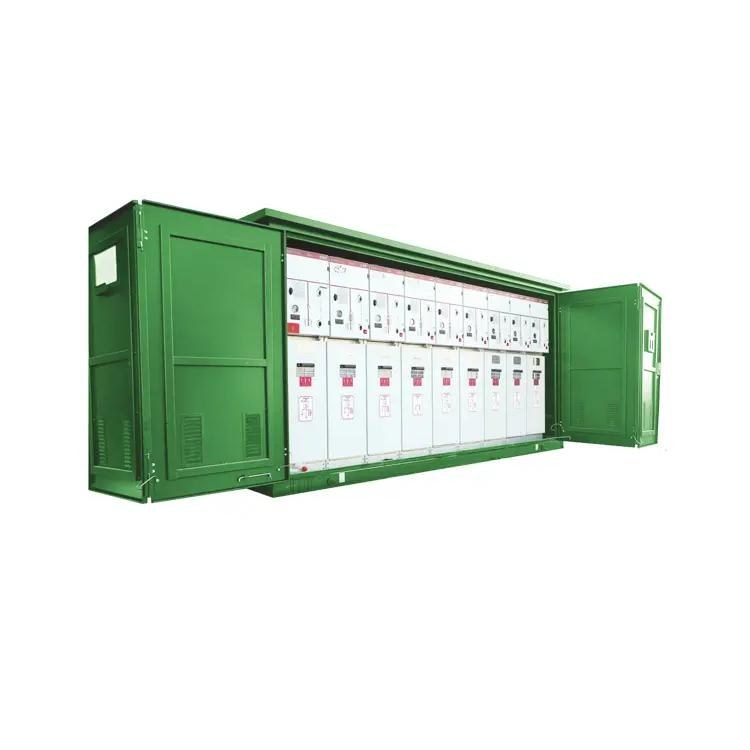
KYS Series
The KYS series outdoor switching stations feature 304 stainless steel enclosures for weather-proof and corrosion-resistant operation. Designed for outdoor cable distribution with optional remote monitoring and automation capabilities.

American Style Cable Branch Boxes Series
American style cable branch boxes provide a compact pad-mounted or surface-mounted junction for underground distribution cables, using 600A bolted deadbreak connections and 200A loadbreak elbow connectors. Designed for 12–24 kV networks with loop and radial feed configurations, they allow safe sectionalizing, tapping, and reconfiguration of underground feeders without de-energizing the whole circuit.

Load Break Switch Branch Boxes Series
Cable branch boxes with a built-in load break switch combine cable distribution with switching capability, allowing each outgoing feeder to be isolated and switched for ring-main operation. Rated 12–24 kV, 630A, they use SF6 or vacuum load break switches for maintenance-free switching in urban distribution networks and ring main configurations.

LV Cable Distribution Boxes Series
Low-voltage (400V) cable distribution boxes distribute power from a transformer or main board to multiple outgoing circuits, with fuses or MCCBs for each way. Rated up to 630A, 400V, IP54 weatherproof enclosure, for building, street-lighting and site distribution.

SF6 Gas Insulated Branch Boxes Series
SF6 gas insulated cable branch boxes use sealed SF6 insulation for compact, maintenance-free medium-voltage cable junction and switching. Rated 12–24 kV, 630A, for underground distribution where sealed gas insulation provides immunity to moisture and contamination.
Instant Selection & Quote Calculator
Select your specifications to get an estimated price instantly.
More options(3)
Certification
The values below are computed from what you selected above. Anything that cannot be computed yet is shown as an em dash — never as zero.
Iₙ = S / (√3·U) · I_sc = 100·Iₙ / uₖ · S_sc = √3·U·I_sc · I_p = k·Iₖ
Still required to complete the calculation: rated capacity S, impedance voltage uₖ, short-time or peak withstand current.
Per-model values (P0 / Pk / uₖ declared by the factory, losses, noise, temperature rise, dimensions, weight) are not in the product library: those rows stay at an em dash until the factory parameter sheet is supplied. An em dash means the value is unavailable — it is never rendered as zero.
Reference prices are for estimation only and do not constitute a formal offer.
3 · Get this quote
We will reply with your latest quote instantly.
Related Engineering Calculators
Free sizing and pricing tools for this product category.
Application Scenarios
Urban Underground
Branching for city underground systems.
Industrial
Flexible factory power distribution.
Street Lighting
Municipal lighting distribution points.
Commercial
Branch circuits for tenants.
Renewable
Cable collection for solar/wind.
Transportation
Highway and railway power.
Technical Advantages
Compact
Multiple entries in small enclosure.
Full Insulation
Touch-safe maintenance-free.
Modular
2-6 way with options.
Weatherproof
IP33D-IP44 UV-resistant.
FAQ - Cable Branch Boxes & Switching Stations
What is the advantage of a branch box over a junction box?
What IP rating should a cable branch box have?
Can one branch box serve multiple cable sizes?
What voltage levels are supported?
What is the minimum order quantity (MOQ) for Cable Branch Boxes & Switching Stations?
What is the delivery time for Cable Branch Boxes & Switching Stations?
Related Product Categories
Dry Type Transformers
Dry-type transformers are essential components in modern ele
Oil Immersed Transformers
Oil-immersed transformers are the workhorse of power distrib
Special Isolation Control Transformers
Isolation and control transformers provide galvanic separati
Amorphous Alloy Transformers
Amorphous alloy transformers are the lowest-loss choice for
Box Type Substations
Box-type substations, also known as prefabricated substation
Reactors
Reactors are inductive components that shape power quality b
Ring Main Units
Ring main units (RMUs) are compact, sealed switchgear that f
High Voltage Switchgear
High-voltage switchgear performs switching, protection, and
Low Voltage Switchgear
Low-voltage switchgear and motor control centers (MCCs) deli
Single Phase Transformers
Single-phase control transformers provide galvanic isolation
Three Phase Transformers
Three-phase dry-type transformers step down, isolate, or ada
Voltage Regulators
Automatic voltage regulators (stabilizers) keep output volta
Variable Transformers
Variable auto-transformers deliver continuous, stepless AC v
Inverters
Pure sine wave inverters convert DC battery power (12 V/24 V
Dc Power Supplies
Switching DC power supplies convert AC mains into regulated
Battery Chargers
Intelligent battery chargers restore and maintain lead-acid
Motor Starters
Motor starters control three-phase motor energization with r
Ups
Online double-conversion UPS systems continuously regenerate
Power Capacitors
Self-healing power capacitors provide power factor correctio
Solar Pv Modules
Solar PV modules convert sunlight into direct current and ar
String Inverters
String grid-tie inverters turn the DC output of PV modules i
Hybrid Inverters
Hybrid solar inverters combine a grid-tie inverter and a bat
Energy Storage Batteries
Energy storage batteries store surplus solar or off-peak pow
Pcs Energy Storage
Power conversion systems (PCS) are the bidirectional heart o
Battery Management Systems
The battery management system is the safety and intelligence
Ess Fire Suppression
Fire suppression for energy storage must act in the seconds
Pv Mounting Structures
Mounting structures hold the array to the roof or ground for
Dc Cables Connectors Spd
The DC side of a PV plant is only as reliable as the cables,
Monitoring Scada Communication
A solar or storage plant that cannot be observed and control
Cables Trays Grounding
The AC side and the structural grounding of a plant are easy
Energy Storage Containers
The energy storage container packages battery, power convers
Busway
Busway (bus duct) systems distribute high-current power from
Ev Charging Stations
EV charging stations supply electric vehicles with AC Level
Pole Mounted Switchgear
Pole-mounted switchgear provides outdoor switching, protecti
Svg Svc
Static Var Generator (SVG) and Static Var Compensator (SVC)
Active Harmonic Filters
Active Harmonic Filters (APF), also called active power filt
Ats Transfer Switches
Automatic Transfer Switches (ATS) automatically transfer the
Diesel Generators
Diesel generator sets provide reliable prime or standby powe
Eps Emergency Power
EPS (Emergency Power Supply) systems provide battery-backed
Wind Turbines
QDTB onshore wind turbines span the 2 MW, 3 MW and 5 MW clas
Scada Automation
Substation SCADA and secondary automation equipment for MV/L
American Pad Mounted Transformers
American pad-mounted transformers (ZGS series) place a 12 kV
Need help?
All specifications and dimensions can be customized upon request
Bolted vs Clamp vs Plug-In Terminations: How to Choose
| Bolted Termination | Clamp Termination | Plug-In (Elbow) Termination | |
|---|---|---|---|
| Connection method | Conductor landed on a bolted lug and torqued to specification | Conductor gripped by a mechanical or insulation-displacement body | Pre-moulded elbow or T-connector pushed onto a bushing |
| Conductor range | Handles the widest spread of conductor sizes and materials | Each clamp body covers a narrow band of conductor sizes | Fixed interface, so the cable end must be prepared to match |
| Re-entry | Box can be reopened and re-terminated as the network grows | Re-entry limited once the clamp body has been crimped | One more way is added by plugging in another connector |
| Tools & skill | Torque wrench and cable lugs, standard utility practice | Hand tools only, quick on small conductors | Needs the matching elbow and bushing interface |
| Moisture protection | Depends on the enclosure seal and mastic tape | Depends on the clamp body and sealing tape | Interface is factory-sealed and needs no taping |
| Fault location | Each branch can be isolated inside the box | Fewer test points, so tracing takes longer | Every interface can be separated for testing |
| Typical use | MV distribution boxes and junction points | LV distribution and street lighting | Underground networks built to IEEE 386 practice |
Where QDTB® Cable Branch Boxes Are Specified
Cable branch boxes are specified where an underground main has to be split into several outgoing feeders without a full substation: urban low-voltage networks, street-lighting circuits and the service branches of commercial and residential developments. Sealing the split inside one enclosure instead of a chain of cable joints is what keeps the network re-enterable and confines fault location to a single point.
Industrial plants and renewable projects use them at collector level, where many inverter or turbine branches converge on one feeder. The enclosure class follows the installation — IP54 for pole or wall mounting and IP68 where the box goes direct-buried — while the termination type is chosen against the conductor range the site actually uses.
Transportation and infrastructure schemes specify branch boxes for tunnel, metro and port lighting circuits, because those networks are extended section by section over years. Every extension has to return to an existing branch point rather than cut a new joint into the main.
Units are rated to IEC 60502, with switching and enclosure practice following GB 3906 and IEC 62271-200. Where the network is built to American practice, the terminations follow the IEEE 386 elbow interface so the box mates with the standard connectors already on site.
Frequently Asked Questions
What is the advantage of a branch box over a junction box?
A branch box offers integrated switching and insulation with higher current ratings and better sealing than a simple junction box, and it is built for buried or outdoor duty.
What IP rating should a cable branch box have?
For outdoor or underground use, IP54 or IP68 enclosures are typical; IP68 suits direct burial. Select the rating to match the installation environment and moisture exposure.
Can one branch box serve multiple cable sizes?
Yes. QDTB branch boxes accept 16-400 mm2 conductors with bolted, clamp, or plug-in terminations, so mixed cable sizes can be combined in a single enclosure.
What voltage levels are supported?
Branch boxes cover 0.4 kV to 25 kV networks. The model and insulation class are selected to match the system voltage and the number of outgoing ways required.
What is the minimum order quantity (MOQ) for Cable Branch Boxes & Switching Stations?
One unit for standard products. Custom-designed equipment is quoted on specifications — send your parameters or drawings and our sales team will confirm the MOQ for your configuration.
What is the delivery time for Cable Branch Boxes & Switching Stations?
Standard units are delivered in 30-45 days. Custom or large-capacity units follow a project-specific schedule confirmed at quotation. Rush orders can be accommodated for urgent projects.