Product Search
Find the right transformer for your needs
Amorphous Alloy Transformers
3 Series · 379 Models
Product Images
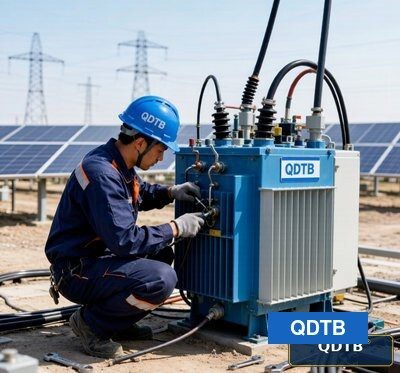
Images are for illustration purposes only
Amorphous Alloy Transformers Overview
Amorphous alloy transformers are the lowest-loss choice for lightly loaded distribution networks. The core uses an amorphous metal ribbon (Fe-Si-B) instead of grain-oriented silicon steel - its disordered atomic structure nearly eliminates magnetic hysteresis loss, cutting no-load (iron) losses by 60-70% compared with a conventional core. QDTB builds them from 10 kVA to 5,000 kVA to Class 1 efficiency per GB 20052. Because no-load loss flows 24/7 regardless of how much power is drawn, the amorphous core pays for itself fastest in rural feeders, PV plants that idle overnight, and residential networks that run at a low average load.
Available Series
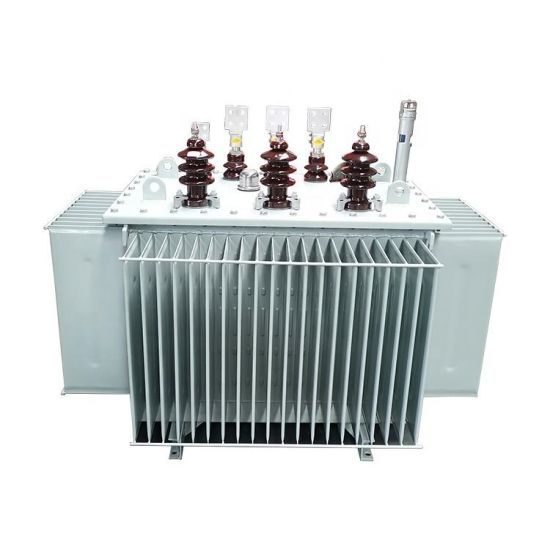
SBH15-M Series
The SBH15-M series combines oil-immersion technology with amorphous alloy core material, achieving ultra-low no-load losses for energy-efficient power distribution.
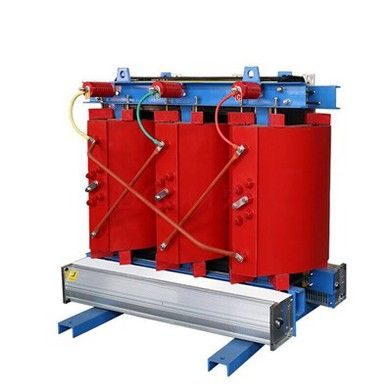
SCBH15 Series
The SC(B)H15 series combines cast resin dry-type technology with amorphous alloy core, delivering ultra-low losses with fire-safe, maintenance-free operation.

SH16 Amorphous Transformers Series
SH16 series amorphous alloy distribution transformers use amorphous metal cores for ultra-low no-load loss, exceeding SH15/SBH15 energy-saving grades. Rated 30–1600 kVA, 6/10/35 kV primary, oil-immersed, for energy-efficiency programs where minimum no-load loss is the priority.
Instant Selection & Quote Calculator
Select your specifications to get an estimated price instantly.
More options(2)
Certification
The values below are computed from what you selected above. Anything that cannot be computed yet is shown as an em dash — never as zero.
Iₙ = S / (√3·U) · I_sc = 100·Iₙ / uₖ · S_sc = √3·U·I_sc · I_p = k·Iₖ
Still required to complete the calculation: rated capacity S, impedance voltage uₖ, short-time or peak withstand current.
Per-model values (P0 / Pk / uₖ declared by the factory, losses, noise, temperature rise, dimensions, weight) are not in the product library: those rows stay at an em dash until the factory parameter sheet is supplied. An em dash means the value is unavailable — it is never rendered as zero.
Read-only: no price factor, not part of the sum — the loss-grade cost is already carried by the efficiency (subtype) base price, so charging here would double-bill. Values come from the product library type-test data, interpolated between published capacities; grades the library does not cover show an em dash, never zero.
油浸非晶(SBH15-M / SH16)
Reference prices are for estimation only and do not constitute a formal offer.
3 · Get this quote
We will reply with your latest quote instantly.
Related Engineering Calculators
Free sizing and pricing tools for this product category.
Application Scenarios
Rural distribution
Long feeders with low average load; no-load loss is the biggest waste, so amorphous pays back quickly.
Solar PV plants
The transformer stays energized overnight while the array produces nothing; amorphous minimizes that standby loss.
Residential networks
Load peaks in the evening and idles overnight; the 24/7 no-load saving adds up fast.
Wind farms
Variable, fluctuating loading; the low-loss core keeps efficiency high across the whole operating range.
Green buildings / LEED
Energy-efficiency certification credits favor lowest-loss distribution equipment.
Smart grid
Low-loss operation complements demand-response and renewable integration programs.
Technical Advantages
Amorphous metal core
Fe-Si-B ribbon with a disordered atomic structure; hysteresis loss is a fraction of grain-oriented silicon steel.
60-70% lower no-load loss
The dominant loss source on lightly loaded or continuously energized networks.
Class 1 efficiency (GB 20052)
Highest energy-efficiency grade; supports LEED and green-building credits.
Lower total cost of ownership
Modest price premium recovered in 3-5 years on low-load networks, then pure savings for 20+ years.
FAQ - Amorphous Alloy Transformers
How much energy do amorphous alloy transformers save?
When should I choose amorphous over a conventional core?
Are amorphous transformers louder than conventional ones?
Is the higher price worth it?
What is the difference between amorphous and nanocrystalline cores?
What capacity and voltage range is available for Amorphous Alloy Transformers?
Related Product Categories
Dry Type Transformers
Dry-type transformers are essential components in modern ele
Oil Immersed Transformers
Oil-immersed transformers are the workhorse of power distrib
Special Isolation Control Transformers
Isolation and control transformers provide galvanic separati
Box Type Substations
Box-type substations, also known as prefabricated substation
Reactors
Reactors are inductive components that shape power quality b
Cable Branch Boxes
Cable branch boxes are sealed distribution points that split
Ring Main Units
Ring main units (RMUs) are compact, sealed switchgear that f
High Voltage Switchgear
High-voltage switchgear performs switching, protection, and
Low Voltage Switchgear
Low-voltage switchgear and motor control centers (MCCs) deli
Single Phase Transformers
Single-phase control transformers provide galvanic isolation
Three Phase Transformers
Three-phase dry-type transformers step down, isolate, or ada
Voltage Regulators
Automatic voltage regulators (stabilizers) keep output volta
Variable Transformers
Variable auto-transformers deliver continuous, stepless AC v
Inverters
Pure sine wave inverters convert DC battery power (12 V/24 V
Dc Power Supplies
Switching DC power supplies convert AC mains into regulated
Battery Chargers
Intelligent battery chargers restore and maintain lead-acid
Motor Starters
Motor starters control three-phase motor energization with r
Ups
Online double-conversion UPS systems continuously regenerate
Power Capacitors
Self-healing power capacitors provide power factor correctio
Solar Pv Modules
Solar PV modules convert sunlight into direct current and ar
String Inverters
String grid-tie inverters turn the DC output of PV modules i
Hybrid Inverters
Hybrid solar inverters combine a grid-tie inverter and a bat
Energy Storage Batteries
Energy storage batteries store surplus solar or off-peak pow
Pcs Energy Storage
Power conversion systems (PCS) are the bidirectional heart o
Battery Management Systems
The battery management system is the safety and intelligence
Ess Fire Suppression
Fire suppression for energy storage must act in the seconds
Pv Mounting Structures
Mounting structures hold the array to the roof or ground for
Dc Cables Connectors Spd
The DC side of a PV plant is only as reliable as the cables,
Monitoring Scada Communication
A solar or storage plant that cannot be observed and control
Cables Trays Grounding
The AC side and the structural grounding of a plant are easy
Energy Storage Containers
The energy storage container packages battery, power convers
Busway
Busway (bus duct) systems distribute high-current power from
Ev Charging Stations
EV charging stations supply electric vehicles with AC Level
Pole Mounted Switchgear
Pole-mounted switchgear provides outdoor switching, protecti
Svg Svc
Static Var Generator (SVG) and Static Var Compensator (SVC)
Active Harmonic Filters
Active Harmonic Filters (APF), also called active power filt
Ats Transfer Switches
Automatic Transfer Switches (ATS) automatically transfer the
Diesel Generators
Diesel generator sets provide reliable prime or standby powe
Eps Emergency Power
EPS (Emergency Power Supply) systems provide battery-backed
Wind Turbines
QDTB onshore wind turbines span the 2 MW, 3 MW and 5 MW clas
Scada Automation
Substation SCADA and secondary automation equipment for MV/L
American Pad Mounted Transformers
American pad-mounted transformers (ZGS series) place a 12 kV
Need help?
All specifications and dimensions can be customized upon request
Amorphous vs Conventional vs Low-Loss Silicon Steel: How to Choose
| Amorphous Alloy Core | Conventional Silicon Steel | Low-Loss Silicon Steel | |
|---|---|---|---|
| Core material | Amorphous metal ribbon with a disordered atomic structure | Grain-oriented silicon steel at the standard loss grade | Grain-oriented silicon steel at the low-loss grade |
| No-load loss | Lowest of the three, typically 60-70% below a conventional core | Reference level for the efficiency class | Lower than a conventional core, but still above amorphous |
| Load loss | Comparable to silicon steel at the same rating | Baseline for the comparison | Tuned lower for high-load duty |
| Noise | Slightly higher magnetostriction, damped by modern clamping | Lowest of the three | Low, close to a conventional core |
| Price premium | Highest core cost of the three | Baseline | Between amorphous and a conventional core |
| Load profile fit | Continuous low average load, where no-load loss runs around the clock | Mixed duty with moderate loading | Higher loading, where load loss dominates the bill |
| Typical application | Rural feeders, PV plants and residential networks | General distribution | Utility and industrial distribution |
Where QDTB® Amorphous Alloy Transformers Are Specified
Because no-load loss flows around the clock whatever the load, an amorphous core pays back fastest where the transformer is energised but lightly loaded: rural distribution feeders, residential networks and street-lighting circuits. Utilities buying against GB 20052 Class 1 efficiency specify amorphous units to reach the loss cap without derating the feeder.
Solar PV plants and wind farms are a natural fit. The station transformer stays energised all night while the plant exports nothing, so the no-load saving accrues over the whole service life, and the same reasoning holds for green-building and smart-grid projects where the building meter also carries the transformer's own losses.
The trade-off is core cost, and in some builds a slightly higher sound level; modern clamping and damping bring noise back in line with conventional units. Where the load profile is high and steady, a conventional or low-loss silicon-steel unit reaches a similar total loss at lower first cost.
Amorphous units are built across the 10 kVA to 5,000 kVA range up to 35 kV, in both oil-immersed and dry-type construction, so the same loss strategy can be applied at a pole-mounted feeder transformer or in an indoor electrical room. That range is what lets a utility standardise on one core technology across its whole distribution network.
Frequently Asked Questions
How much energy do amorphous alloy transformers save?
60-70% no-load loss reduction vs silicon steel. A 500 kVA unit typically saves 3,000-5,000 kWh/year, recovering the price premium in 3-5 years.
When should I choose amorphous over a conventional core?
When the transformer runs continuously at a low average load (roughly below 30-40%) - rural networks, PV standby, residential. At high, steady loads the no-load advantage is a smaller share of total loss.
Are amorphous transformers louder than conventional ones?
The amorphous ribbon shows slightly higher magnetostriction, but modern clamping and damping bring noise to a comparable level (typically 60 dB or below for the standard range).
Is the higher price worth it?
The premium is modest and the no-load savings are permanent; total cost of ownership over 20+ years is lower on lightly loaded networks.
What is the difference between amorphous and nanocrystalline cores?
Amorphous (Fe-Si-B) is optimized for 50/60 Hz power distribution; nanocrystalline targets high-frequency (kHz+) applications.
What capacity and voltage range is available for Amorphous Alloy Transformers?
QDTB® supplies Amorphous Alloy Transformers with voltage ratings from 0.48 kV to 35 kV.