Product Search
Find the right transformer for your needs
Hybrid Solar Inverters
2 Product Series · 11 Models available
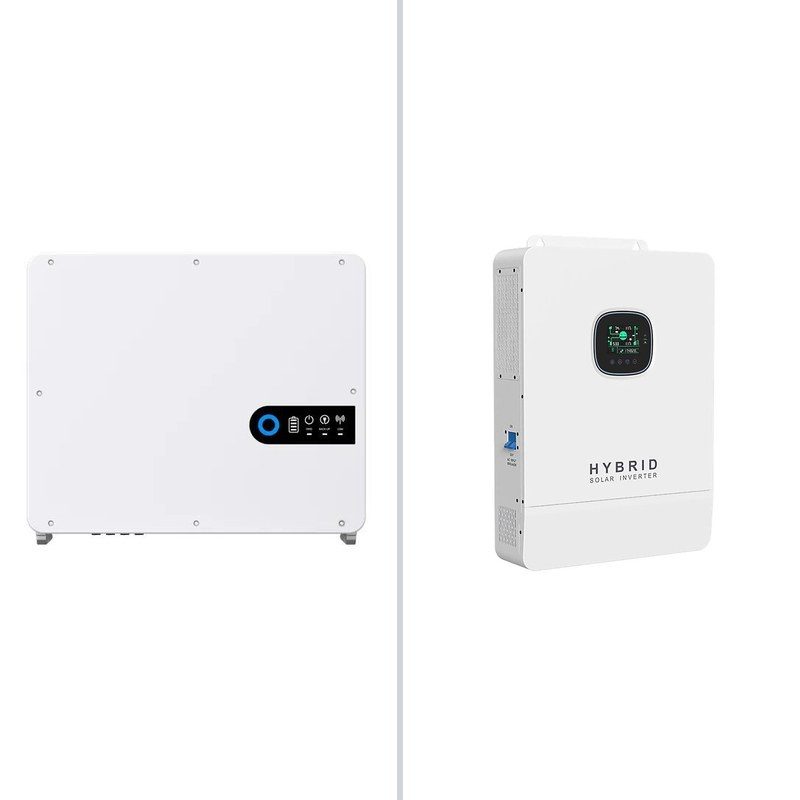
Hybrid solar inverters combine a grid-tie inverter and a battery charger in one unit, so a single device can feed the grid, charge storage and supply critical loads when the grid fails. QDTB hybrid inverters cover 3 kW to 20 kW in low-voltage (48 V) and high-voltage battery platforms, with built-in MPPT, generator and grid ports. Seamless transfer to backup mode keeps essential circuits running during outages, while programmable operating modes enable self-consumption, peak-shaving and time-of-use arbitrage. They are the natural core of residential and small commercial solar-plus-storage systems.
Specifications Range
All specifications and dimensions can be customized upon request
| Key parameters | Model Range |
|---|---|
| Rated Power | 3–20 kW |
| Battery Voltage | 48 V, 409.6 V |
| Max Charge/Discharge | 60–135 A |
| Transfer Time | 10 ms, 20 ms |
| Max Efficiency | 97.5–98.2 % |
| Protection Level | IP65 |
Available Series
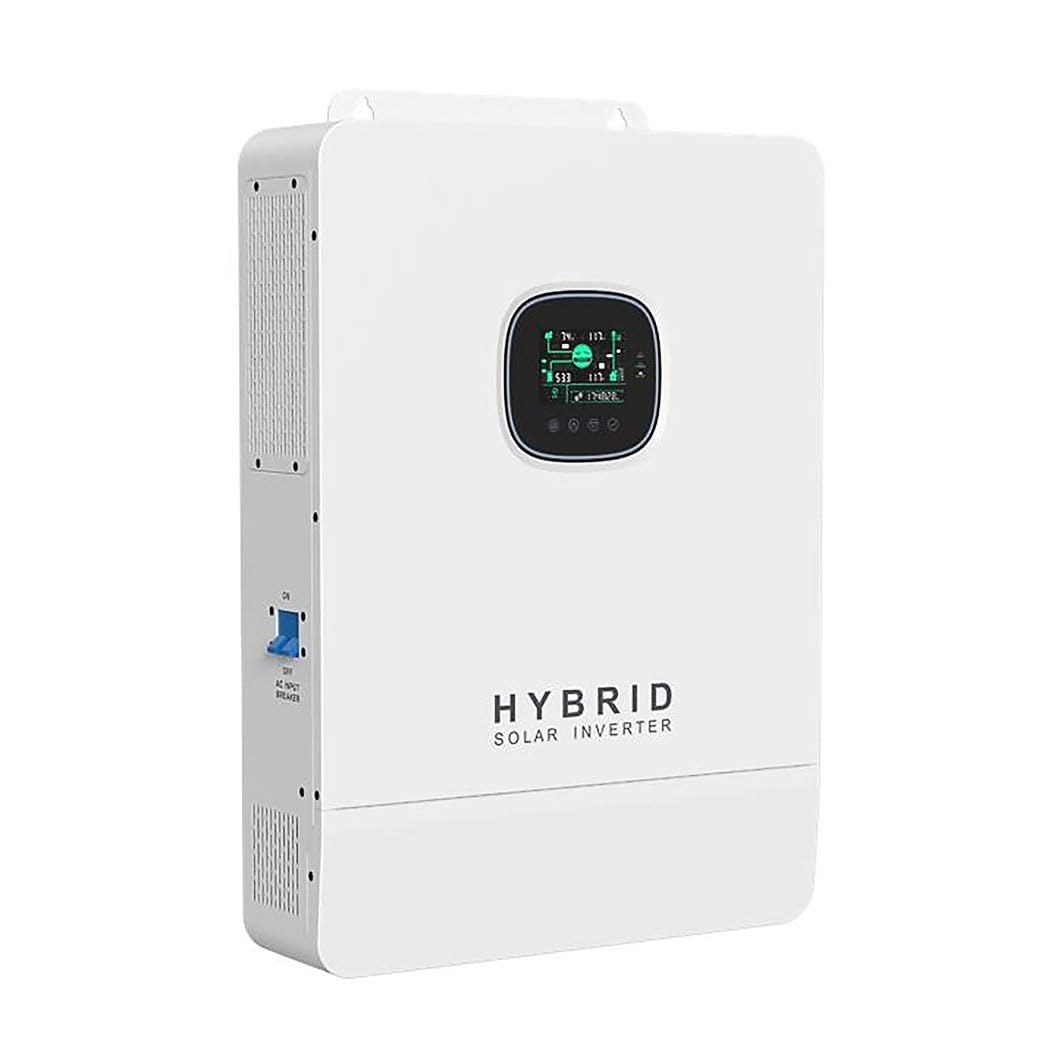
HY-LV
→HY-LV Series — 48 V Low-Voltage Hybrid Inverters
Low-voltage (48 V) hybrids from 3 to 6 kW suit retrofit and residential systems where battery wiring is simple and safety voltages are preferred.
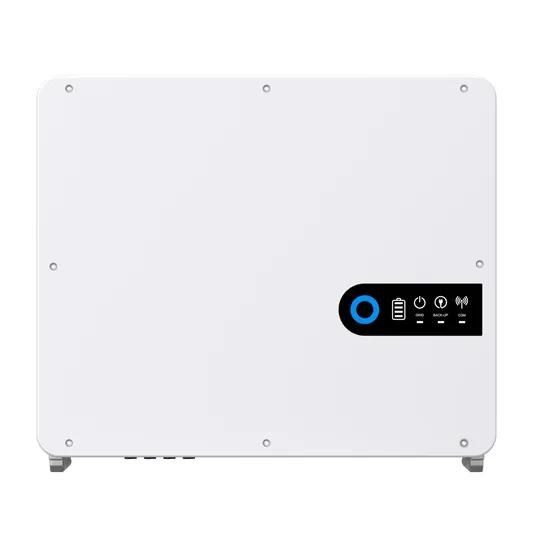
HY-HV
→HY-HV Series — High-Voltage Hybrid Inverters
High-voltage hybrids from 8 to 12 kW pair with high-voltage battery banks for higher efficiency and lower current in larger residential and small commercial installations.
Application Scenarios
Residential Solar-Plus-Storage
A single hybrid unit manages PV, battery and grid to maximise self-consumption of solar energy.
Backup Power
Automatic switchover to battery keeps lighting, refrigeration and communications alive during grid outages.
Time-of-Use Arbitrage
Charge the battery on cheap night-time power and discharge during expensive peak hours.
Off-Grid Homes
Build a complete island system from PV, battery and generator inputs without a separate charge controller.
Peak-Shaving for Small Business
Cap demand spikes from air-conditioning and machinery to reduce demand charges.
Grid-Tie with Future Storage
Install a hybrid now and add batteries later, avoiding a second inverter purchase.
Technical Advantages
All-in-One Architecture
MPPT charger, bidirectional inverter and transfer switch integrated in one enclosure.
Fast Transfer
Millisecond-grade switchover to backup mode keeps sensitive loads from rebooting.
Dual Battery Compatibility
Supports 48 V low-voltage or high-voltage LiFePO4 banks to match existing or planned storage.
Programmable Modes
Self-consumption, peak-shaving, UPS and generator-assist strategies selectable from the display or app.
Frequently Asked Questions
How is a hybrid inverter different from a string inverter?
A string inverter only converts PV to grid AC; a hybrid adds a battery port and backup output, so it can store energy and run loads off-grid.
What battery voltage should I choose?
48 V low-voltage suits retrofit and small systems with cheaper wiring; high-voltage banks reduce current and improve efficiency for larger storage.
How fast is the transfer to backup mode?
Our hybrids switch in milliseconds, fast enough that most computers and routers keep running without reboot.
Can I start with PV only and add batteries later?
Yes — the inverter operates as a grid-tie unit first, and the battery can be connected later without replacing hardware.
Does it support a generator input?
Yes, a dedicated generator port accepts a back-up genset for extended off-grid operation and battery charging.
What is the minimum order quantity (MOQ) for Hybrid Solar Inverters?
One unit for standard products. Custom-designed equipment is quoted on specifications — send your parameters or drawings and our sales team will confirm the MOQ for your configuration.
Instant Selection & Quote Calculator
Select your specifications to get an estimated price instantly.
More options(5)
Certification
Reference prices are for estimation only and do not constitute a formal offer.
3 · Get this quote
We will reply with your latest quote instantly.
Solar System Configurator
Size your solar array, storage and balance-of-system, and get an instant bill of materials.
Need help?
All specifications and dimensions can be customized upon request
Hybrid vs String vs AC-Coupled Storage: How to Choose
| Hybrid Inverter (DC-Coupled) | String Inverter (PV Only) | AC-Coupled Storage | |
|---|---|---|---|
| Architecture | One unit converts PV, charges the battery and feeds the load | PV is converted to grid AC and nothing else | Separate PV inverter plus a battery inverter on the AC side |
| Battery connection | Battery on a dedicated DC port with BMS communication | None — storage needs another device | Battery on the storage inverter's own DC port |
| Backup output | Dedicated backup port for essential circuits | None, so the load drops with the grid | Backup port on the storage inverter |
| Retrofit | Chosen at the start, or as a replacement for a string unit | The default for PV-only projects | Added to an existing PV system without touching the array |
| Conversion path | PV to battery to AC stays inside one unit | No storage path at all | PV to AC to DC to AC, so each conversion loses energy |
| Cost | Mid-range, one device for two jobs | Lowest, because nothing extra is included | Highest where a second inverter is added later |
| Typical application | New residential and small commercial solar-plus-storage | PV-only rooftops and ground plants | Adding storage to a working PV system |
Where QDTB® Hybrid Inverters Are Specified
Hybrid inverters are specified where a building needs both solar and storage from one device: new residential solar-plus-storage systems, backup power for essential circuits, and small commercial sites running time-of-use arbitrage or peak shaving. One unit handles the PV conversion and the battery, which keeps the wiring and the commissioning simple.
On grid-tie projects the inverter can start as a PV-only unit and take a battery later, so the customer is not locked into buying storage on day one. A dedicated generator port covers extended off-grid operation where a backup genset fills in during a long outage.
The 48 V low-voltage platform suits retrofit and small systems with cheaper wiring, while the high-voltage platform suits new builds where a compact battery stack is preferred. Transfer to backup mode takes milliseconds, fast enough that most computers and routers keep running.
The range covers 3 kW to 20 kW with built-in MPPT, generator and grid ports. Efficiency reaches 98.2 % on the high-voltage platform, and the units are certified to IEC 62109-1/-2 and IEC 62477.
Frequently Asked Questions
How is a hybrid inverter different from a string inverter?
A string inverter only converts PV to grid AC; a hybrid adds a battery port and backup output, so it can store energy and run loads off-grid.
What battery voltage should I choose?
48 V low-voltage suits retrofit and small systems with cheaper wiring; high-voltage banks reduce current and improve efficiency for larger storage.
How fast is the transfer to backup mode?
Our hybrids switch in milliseconds, fast enough that most computers and routers keep running without reboot.
Can I start with PV only and add batteries later?
Yes — the inverter operates as a grid-tie unit first, and the battery can be connected later without replacing hardware.
Does it support a generator input?
Yes, a dedicated generator port accepts a back-up genset for extended off-grid operation and battery charging.
What is the minimum order quantity (MOQ) for Hybrid Solar Inverters?
One unit for standard products. Custom-designed equipment is quoted on specifications — send your parameters or drawings and our sales team will confirm the MOQ for your configuration.