Product Search
Find the right transformer for your needs
ESS Fire Suppression Systems
3 Product Series · 4 Models available
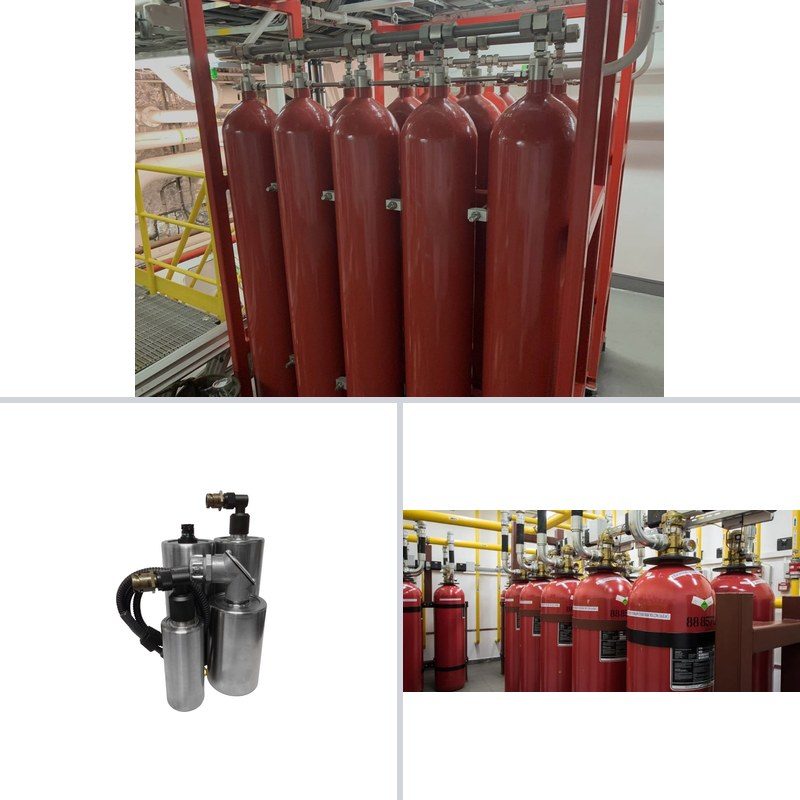
Fire suppression for energy storage must act in the seconds before a single cell's thermal runaway spreads to the whole battery. QDTB supplies perfluorohexanone (Novec 1230) systems engineered for PACK-level, cluster-level and room-level protection, with combined gas, VOC, CO and smoke detectors that trigger millisecond discharge directly into the affected module. Discharge is interlocked with the BMS so power is cut before agent release, preventing reignition. Because perfluorohexanone is non-conductive and leaves no residue, it extinguishes safely around live electronics — the same reason it protects data centres and battery rooms worldwide.
Specifications Range
All specifications and dimensions can be customized upon request
| Key parameters | Model Range |
|---|---|
| Agent | Perfluorohexanone (Novec), Heptafluoropropane (FM-200), Aerosol |
| Protection Level | PACK-level, Cluster-level, Room-level (total flooding) |
| Detection | Gas VOC, CO, smoke, Gas VOC, CO, smoke, temperature, Smoke, temperature, gas VOC, Smoke, temperature, combustible gas |
| Response time | Millisecond (PACK-level), Second (cluster-level), Second (room-level) |
| Discharge Mode | Spot injection, Total flooding |
Available Series
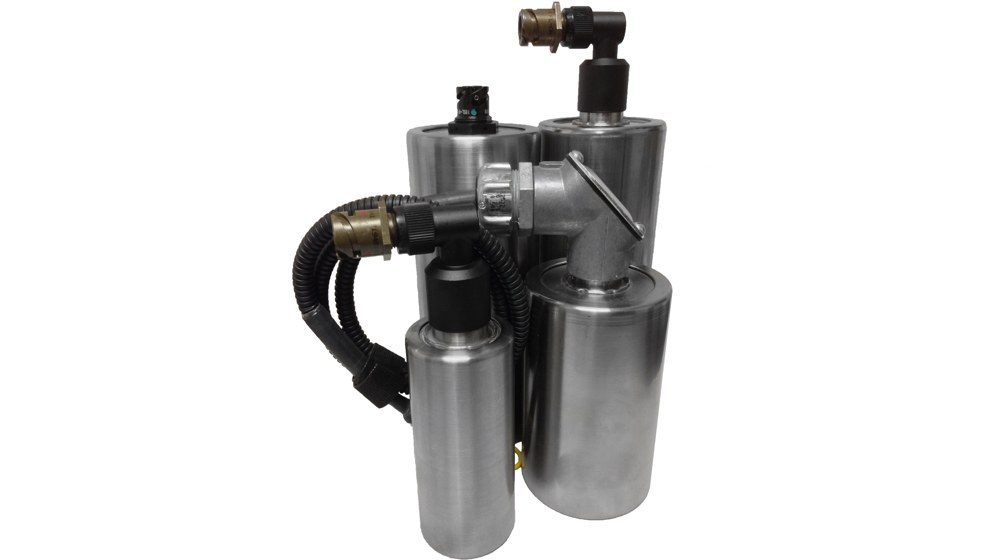
PACK-level
→PACK-Level Fire Suppression — In-Module Point Injection
Detectors and nozzles inside each battery module deliver perfluorohexanone directly onto a failing cell within milliseconds, stopping thermal runaway before it propagates.
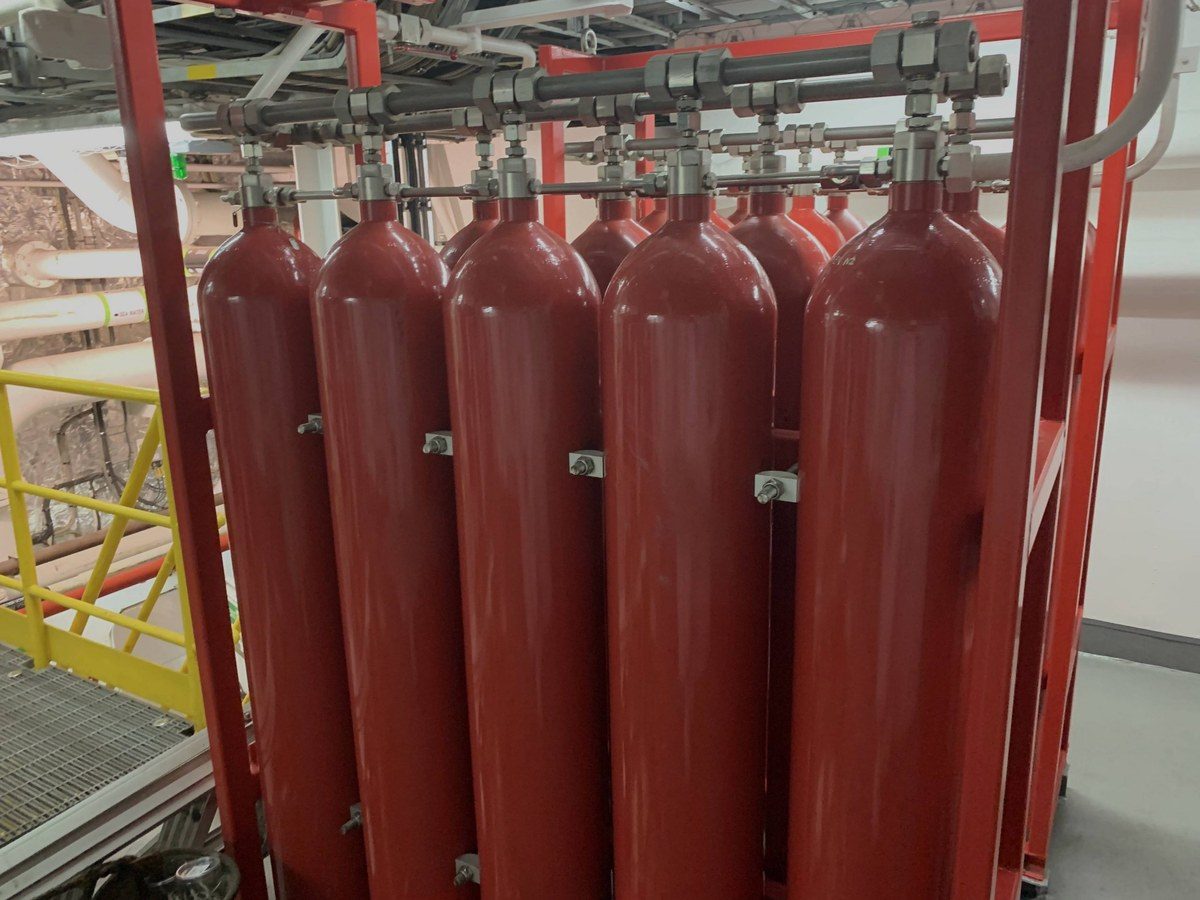
Cluster-level
→Cluster-Level Fire Suppression — Enclosure Containment
Agent injected into the battery cluster enclosure contains events that escape the module level, protecting the neighbouring packs in a rack or cabinet.
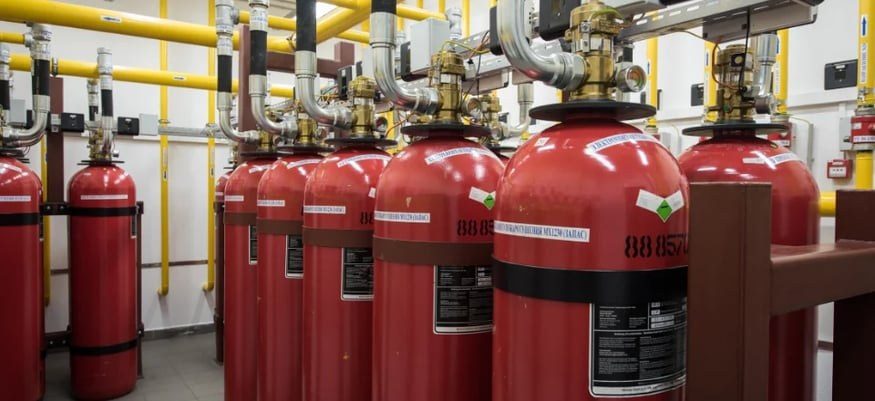
Room-level
→Room-Level Fire Suppression — Total-Flood Protection
Total-flood perfluorohexanone systems protect whole storage containers, battery rooms and data halls as a final line of defence over module and cluster protection.
Application Scenarios
PACK-Level Protection
Detectors inside each battery module trigger point injection before a single cell can cascade.
Cluster-Level Suppression
Agent injected into the cluster enclosure to contain a propagating event between packs.
Container / Room Flooding
Total-flood systems protect whole storage containers, battery rooms and cabinets.
Data Centres & UPS Rooms
Non-conductive, residue-free agent is safe around servers and switchgear.
Outdoor Cabinet BESS
Sealed cabinet systems for distributed, curb-side and industrial storage cabinets.
Fire-Protected Switchgear
Spot systems guarding high-value electrical panels against arc and thermal events.
Technical Advantages
Perfluorohexanone Agent
Novec 1230 extinguishes by heat absorption, is non-conductive and leaves no residue.
Multi-Signal Detection
Combined gas, VOC, CO, smoke and temperature sensing catches thermal runaway early.
Millisecond Response
PACK-level point injection discharges within milliseconds of a trigger signal.
BMS-Interlocked Discharge
Power is cut before agent release to eliminate electrical reignition sources.
Frequently Asked Questions
Why perfluorohexanone instead of heptafluoropropane?
Perfluorohexanone has near-zero global-warming potential and extinguishes by cooling, while heptafluoropropane is being phased down and is less suited to lithium battery fires.
What is the difference between PACK-level and room-level protection?
PACK-level puts detectors and nozzles inside each battery module for the fastest, most targeted response; room-level floods the whole enclosure as a second line of defence.
Is the agent safe around live electronics?
Yes — it is non-conductive and residue-free, so it will not damage cells, boards or switchgear.
How is discharge triggered?
Combined detectors signal the controller, which interlocks with the BMS to cut power, then releases agent into the target zone.
Can it suppress thermal runaway, not just the flame?
PACK-level injection cools the failing cell and its neighbours, suppressing the propagation that turns one cell into a cluster fire.
What is the minimum order quantity (MOQ) for ESS Fire Suppression Systems?
One unit for standard products. Custom-designed equipment is quoted on specifications — send your parameters or drawings and our sales team will confirm the MOQ for your configuration.
Instant Selection & Quote Calculator
Select your specifications to get an estimated price instantly.
More options(4)
Certification
Reference prices are for estimation only and do not constitute a formal offer.
3 · Get this quote
We will reply with your latest quote instantly.
Solar System Configurator
Size your solar array, storage and balance-of-system, and get an instant bill of materials.
Need help?
All specifications and dimensions can be customized upon request
Module-Level (PACK) vs Cluster-Level vs Room-Level Protection: How to Choose
| Module-Level (PACK) | Cluster-Level | Room-Level Total Flooding | |
|---|---|---|---|
| Detection point | Detectors inside each battery module | Detectors on the cluster enclosure and busbar zone | Detectors across the room or container volume |
| Agent delivery | Spot injection directly into the affected module | Nozzles on the cluster, flooding the rack zone | Total flooding of the whole enclosure |
| Response | Millisecond injection at the first sign of runaway | Seconds, once the cluster shows a fault | Seconds, after the room detector trips |
| Agent quantity | Smallest, since only the module is flooded | Moderate, sized to the rack volume | Largest, sized to the room volume |
| Cost | Highest per module, lowest total agent | Middle | Lowest per module, highest total agent |
| Retrofit | Fitted with the module, hard to add later | Added with the rack | Easiest to add to an existing room |
| Typical application | Containerised and cabinet BESS | Commercial battery clusters | Data centres, UPS rooms and switchgear rooms |
Where QDTB® ESS Fire Suppression Is Specified
Storage fire suppression is specified on the assumption that a cell will eventually fail, so the design question is how fast the failure is contained rather than whether it happens. PACK-level injection cools the failing cell and its neighbours before thermal runaway propagates, which is why it is specified on containerised and outdoor cabinet BESS where the modules are close together.
Cluster-level protection sits between the pack and the room: it covers the busbar and rack zone where a loose joint or a short can start a fire that the module detectors never see. Room-level flooding covers the enclosure itself and is the layer that data centres, UPS rooms and switchgear rooms have used for years.
Perfluorohexanone is chosen because it is non-conductive and leaves no residue, so it can discharge around live electronics without writing off the equipment it just protected. Discharge is interlocked with the BMS, which cuts power before the agent releases and removes the reignition path.
Systems are engineered to GB/T 39733 and NFPA 855, with combined gas, VOC, CO and smoke detection driving the release. Requiring more than one signal before discharge means a single false alarm cannot empty the cylinder.
Frequently Asked Questions
Why perfluorohexanone instead of heptafluoropropane?
Perfluorohexanone has near-zero global-warming potential and extinguishes by cooling, while heptafluoropropane is being phased down and is less suited to lithium battery fires.
What is the difference between PACK-level and room-level protection?
PACK-level puts detectors and nozzles inside each battery module for the fastest, most targeted response; room-level floods the whole enclosure as a second line of defence.
Is the agent safe around live electronics?
Yes — it is non-conductive and residue-free, so it will not damage cells, boards or switchgear.
How is discharge triggered?
Combined detectors signal the controller, which interlocks with the BMS to cut power, then releases agent into the target zone.
Can it suppress thermal runaway, not just the flame?
PACK-level injection cools the failing cell and its neighbours, suppressing the propagation that turns one cell into a cluster fire.
What is the minimum order quantity (MOQ) for ESS Fire Suppression Systems?
One unit for standard products. Custom-designed equipment is quoted on specifications — send your parameters or drawings and our sales team will confirm the MOQ for your configuration.