Product Search
Find the right transformer for your needs
Energy Storage Containers
2 Product Series · 5 Models available
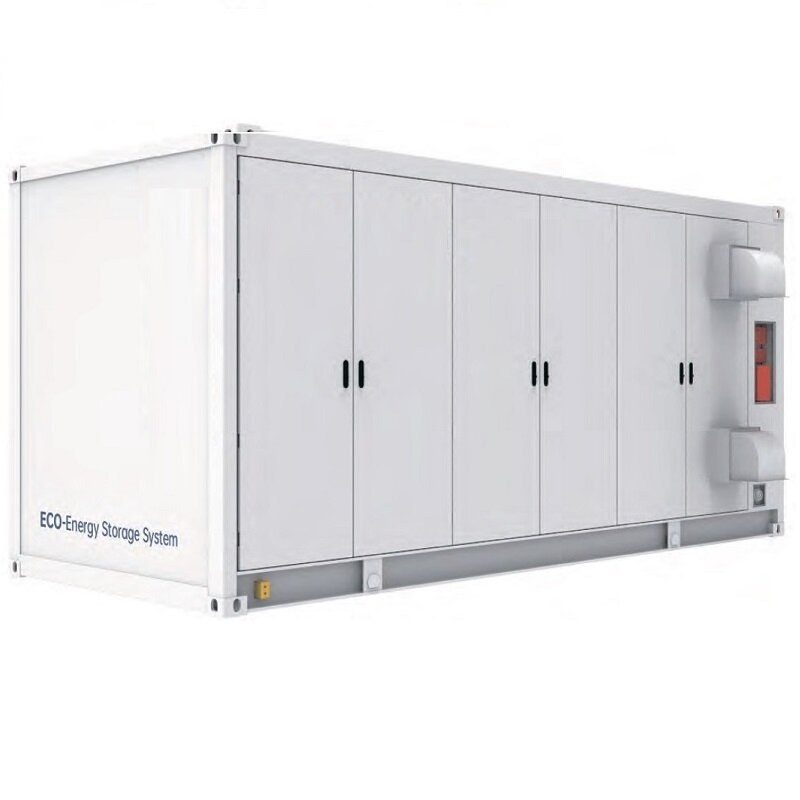
The energy storage container packages battery, power conversion, thermal management and fire protection into a single factory-built, transportable unit. QDTB's liquid-cooled 20-ft high-cube container delivers up to 2.5 MW / 5 MWh per unit using 0.5P LiFePO4 cells (3.2 V / 314 Ah), arranged in 1P104S packs and 1P416S clusters for 5016 kWh at 1331.2 Vdc. A three-level BMS (cell–cluster–container), a 60 kW liquid chiller and dual perfluorohexanone-plus-water fire suppression keep the battery inside its safe operating window across -20 to 50 °C. Pre-integrated and factory-tested, the container drops onto a prepared pad and energises in days — the fastest route to grid-scale, commercial or microgrid storage.
Specifications Range
All specifications and dimensions can be customized upon request
| Key parameters | Model Range |
|---|---|
| Rated Power | 100–2500 MW |
| Rated Energy | 215–5016 MWh |
| Rated Voltage | 1331.2 V, 768 V, 832 V |
| Cooling | Liquid cooling, 60 kW chiller, Liquid cooling, 30 kW chiller, Liquid cooling |
| Fire Suppression | Perfluorohexanone (Novec 1230) + water, Aerosol + perfluorohexanone + water |
Available Series
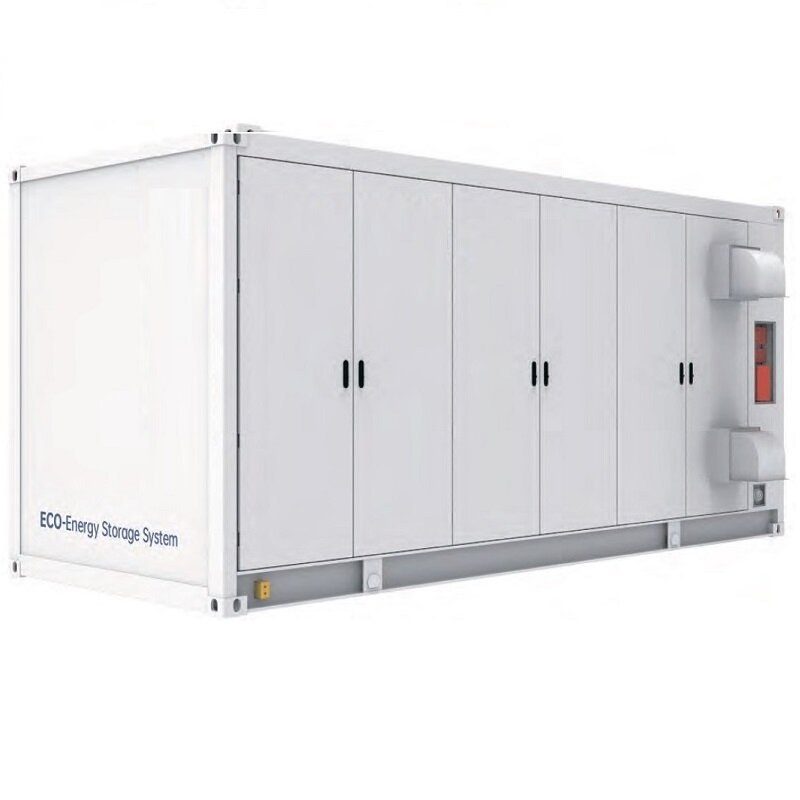
Liquid-Cooled
→Liquid-Cooled Series — 20-ft Containerised BESS
Factory-integrated 20-ft high-cube containers delivering 1.25 MW/2.5 MWh to 2.5 MW/5 MWh of liquid-cooled LiFePO4 storage, with three-level BMS and dual fire suppression.

CAB
→CAB Series — Liquid-Cooled Integrated Outdoor Cabinets
All-in-one liquid-cooled outdoor cabinets delivering 100 kW/215 kWh to 200 kW/372 kWh of integrated LiFePO4 storage — battery, BMS, PCS, EMS, thermal management, fire suppression and power distribution in a single IP55 enclosure for commercial & industrial deployment.
Application Scenarios
Grid-Side Storage
Containerised BESS for peak shaving, frequency regulation and capacity services.
Commercial & Industrial
On-site storage that cuts demand charges and provides backup for factories and campuses.
Renewable Integration
Co-located storage that smooths PV output and shifts generation into the evening peak.
Microgrids
Containerised storage as the anchor for islanded networks and remote communities.
Solar-Plus-Storage
Paired with PV and PCS to form a complete, self-contained generation and storage plant.
Emergency & Backup
Rapid-deployment storage for grid resilience and critical-load backup.
Technical Advantages
2.5 MW / 5 MWh per Unit
20-ft high-cube footprint delivers 5016 kWh, scalable by paralleling units.
Liquid-Cooled Thermal Management
60 kW chiller holds cells in the optimal temperature band, extending cycle life.
Three-Level BMS
Cell, cluster and container management with full SOC/SOH monitoring and protection.
Dual Fire Suppression
Perfluorohexanone PACK/cluster suppression plus water flooding for containment.
Frequently Asked Questions
Why liquid cooling instead of air cooling?
Liquid cooling keeps cell temperature more uniform, supports higher energy density and prolongs cycle life, especially in hot climates.
How much energy does one container hold?
A single 20-ft unit is rated 2.5 MW / 5 MWh (5016 kWh at 1331.2 Vdc), scalable to larger capacities by paralleling containers.
What battery cells are used?
0.5P LiFePO4 cells of 3.2 V / 314 Ah, chosen for thermal stability and long cycle life.
How does the fire protection work?
Combined detectors inside each PACK trigger perfluorohexanone discharge at PACK/cluster level, with a water-flooding system as a final containment layer.
What is the operating temperature range?
The container operates from -20 to 50 °C, with derating above 45 °C, and is IP54-rated (IP55 optional) for outdoor installation.
What is the minimum order quantity (MOQ) for Energy Storage Containers?
One unit for standard products. Custom-designed equipment is quoted on specifications — send your parameters or drawings and our sales team will confirm the MOQ for your configuration.
Instant Selection & Quote Calculator
Select your specifications to get an estimated price instantly.
More options(7)
Certification
Reference prices are for estimation only and do not constitute a formal offer.
3 · Get this quote
We will reply with your latest quote instantly.
Solar System Configurator
Size your solar array, storage and balance-of-system, and get an instant bill of materials.
Need help?
All specifications and dimensions can be customized upon request
Liquid-Cooled vs Air-Cooled vs Skid Cabinet: How to Choose
| Liquid-Cooled Container | Air-Cooled Container | Skid-Mounted Cabinet | |
|---|---|---|---|
| Thermal uniformity | Coolant keeps cell temperatures close across the rack | Airflow leaves hotspots between packs | Cabinet cooling, sized to a smaller bank |
| Energy density | Highest, because packs sit closer together | Lower, since air channels need space | Lowest per unit footprint |
| Auxiliary power | Chiller draws power continuously | Fans draw less, but cooling is less effective in heat | Small fans or a compact chiller |
| Environment range | Holds the battery window across a wide ambient band | Derates earlier in high ambient | Suited to moderate climates |
| Maintenance | Coolant circuit and chiller need scheduled checks | Filter and fan servicing | Simple access, small spare list |
| Cost | Highest per kWh installed | Lower, with a shorter service life in heat | Lowest, at the smallest scale |
| Typical application | Grid-scale and large C&I storage | Moderate-climate C&I storage | Microgrids and small commercial sites |
Where QDTB® Energy Storage Containers Are Specified
A storage container is specified when a plant needs megawatt-scale capacity delivered as one tested unit: grid-side storage, commercial and industrial sites, renewable integration and microgrids. Battery, power conversion, thermal management and fire protection arrive in one enclosure, so site work is a pad, a cable connection and commissioning rather than a construction project.
Liquid cooling is what makes the footprint practical at this scale, because it keeps cell temperatures uniform across a densely packed rack. Uniform temperature is also what protects cycle life — a bank that runs a few degrees hotter in one corner ages faster than its warranty assumes.
The 20-ft unit carries 2.5 MW / 5 MWh with LFP cells, a three-level BMS and dual perfluorohexanone plus water suppression, and holds the battery inside its safe window from -20 to 50 °C. Above 45 °C the unit derates rather than pushing the cells outside their limits.
Solar-plus-storage and backup schemes use the same container as the energy block, sized on usable energy and the plant's dispatch profile. Pre-integration is what shortens the schedule: the container is factory-tested, so energisation is measured in days after the pad is ready.
Frequently Asked Questions
Why liquid cooling instead of air cooling?
Liquid cooling keeps cell temperature more uniform, supports higher energy density and prolongs cycle life, especially in hot climates.
How much energy does one container hold?
A single 20-ft unit is rated 2.5 MW / 5 MWh (5016 kWh at 1331.2 Vdc), scalable to larger capacities by paralleling containers.
What battery cells are used?
0.5P LiFePO4 cells of 3.2 V / 314 Ah, chosen for thermal stability and long cycle life.
How does the fire protection work?
Combined detectors inside each PACK trigger perfluorohexanone discharge at PACK/cluster level, with a water-flooding system as a final containment layer.
What is the operating temperature range?
The container operates from -20 to 50 °C, with derating above 45 °C, and is IP54-rated (IP55 optional) for outdoor installation.
What is the minimum order quantity (MOQ) for Energy Storage Containers?
One unit for standard products. Custom-designed equipment is quoted on specifications — send your parameters or drawings and our sales team will confirm the MOQ for your configuration.