Product Search
Find the right transformer for your needs
Wind Turbines
3 Series · 6 Models
Product Images

Images are for illustration purposes only
Wind Turbines Overview
QDTB onshore wind turbines span the 2 MW, 3 MW and 5 MW classes for utility-scale and distributed wind power generation. Designed to IEC 61400 requirements with three-blade horizontal-axis rotors and doubly-fed induction generator (DFIG) or direct-drive permanent-magnet generator topologies, they deliver grid-code-compliant renewable power for onshore wind farms.
Available Series
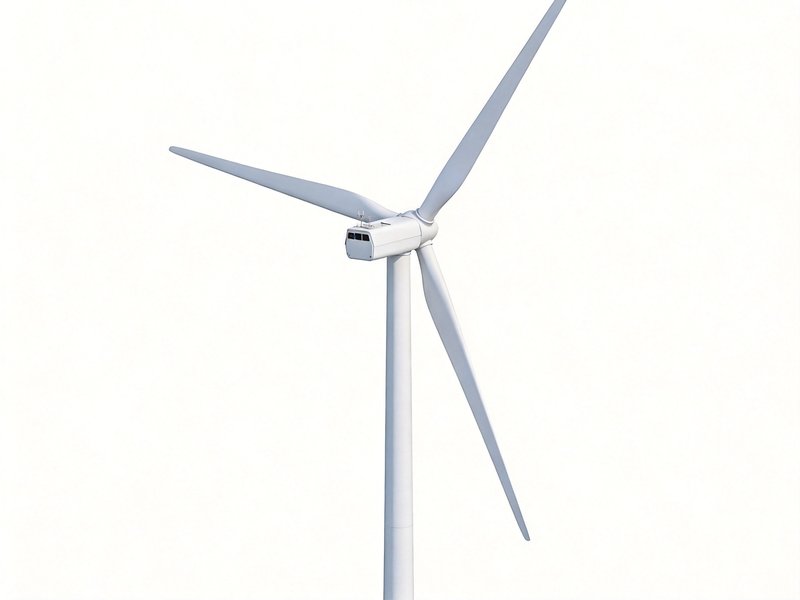
WT 2MW Series
The 2 MW-class onshore wind turbine is a three-blade, horizontal-axis unit for utility-scale and distributed wind farms. Rated approximately 2 MW with a rotor diameter suited to moderate wind sites, it is designed to IEC 61400 requirements and available with doubly-fed induction generator (DFIG) or direct-drive permanent-magnet generator topologies for grid-connected power generation.
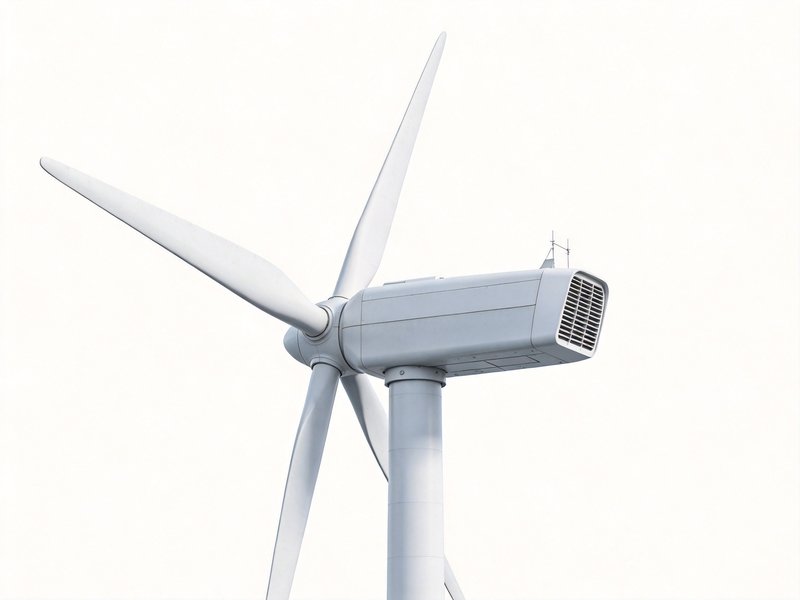
WT 3MW Series
The 3 MW-class onshore wind turbine is a large three-blade horizontal-axis unit optimized for utility-scale wind farms and good wind-resource sites. Rated approximately 3 MW and designed to IEC 61400, it offers a higher energy yield per foundation and a lower balance-of-plant cost per megawatt, with DFIG or direct-drive generator topologies and grid-code-compliant controls.
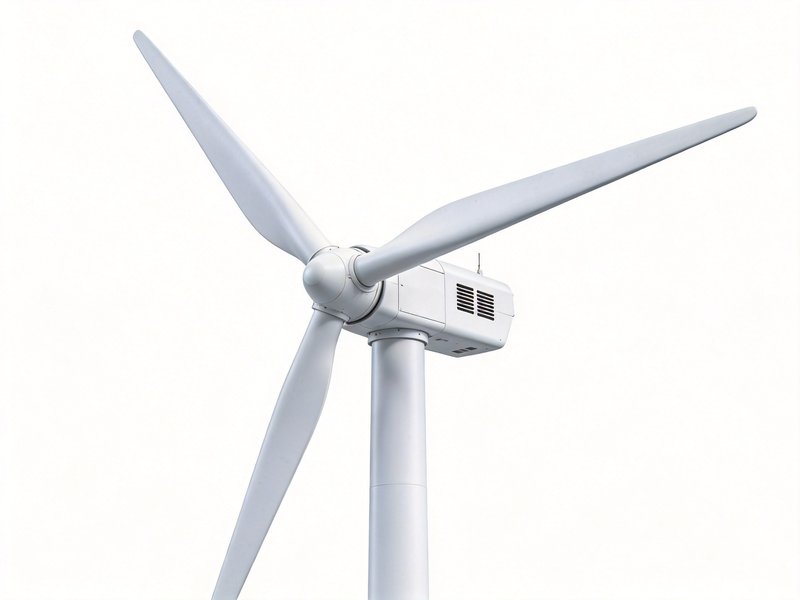
WT 5MW Series
The 5 MW-class onshore wind turbine is a high-capacity three-blade horizontal-axis unit for the largest onshore wind farms and the strongest wind-resource regions. Rated approximately 5 MW and designed to IEC 61400, it maximizes energy output per installation and minimizes balance-of-plant cost per megawatt, with direct-drive or DFIG topologies and full grid-code compliance.
Instant Selection & Quote Calculator
Select your specifications to get an estimated price instantly.
More options(4)
Certification
Reference prices are for estimation only and do not constitute a formal offer.
3 · Get this quote
We will reply with your latest quote instantly.
Related Engineering Calculators
Free sizing and pricing tools for this product category.
Application Scenarios
Utility-Scale Wind Farms
High-capacity turbines for grid-scale onshore wind generation.
Distributed Wind Projects
Community and industrial self-generation wind power.
Repowering
Replacing older low-rated turbines with higher-capacity units.
Hybrid Renewable Projects
Wind combined with solar PV and energy storage.
Technical Advantages
2–5 MW Classes
Turbines matched to site wind resource and project scale.
IEC 61400 Design
Compliance with international wind turbine safety requirements.
DFIG & Direct-Drive
Two generator topologies for different site and O&M strategies.
Grid-Code Compliance
Low/high-voltage ride-through and reactive power control.
FAQ - Wind Turbines
What is an onshore wind turbine?
What does IEC 61400 specify?
What is the difference between DFIG and direct-drive?
Which turbine size should I choose?
What capacity and voltage range is available for Wind Turbines?
What is the minimum order quantity (MOQ) for Wind Turbines?
Related Product Categories
Dry Type Transformers
Dry-type transformers are essential components in modern ele
Oil Immersed Transformers
Oil-immersed transformers are the workhorse of power distrib
Special Isolation Control Transformers
Isolation and control transformers provide galvanic separati
Amorphous Alloy Transformers
Amorphous alloy transformers are the lowest-loss choice for
Box Type Substations
Box-type substations, also known as prefabricated substation
Reactors
Reactors are inductive components that shape power quality b
Cable Branch Boxes
Cable branch boxes are sealed distribution points that split
Ring Main Units
Ring main units (RMUs) are compact, sealed switchgear that f
High Voltage Switchgear
High-voltage switchgear performs switching, protection, and
Low Voltage Switchgear
Low-voltage switchgear and motor control centers (MCCs) deli
Single Phase Transformers
Single-phase control transformers provide galvanic isolation
Three Phase Transformers
Three-phase dry-type transformers step down, isolate, or ada
Voltage Regulators
Automatic voltage regulators (stabilizers) keep output volta
Variable Transformers
Variable auto-transformers deliver continuous, stepless AC v
Inverters
Pure sine wave inverters convert DC battery power (12 V/24 V
Dc Power Supplies
Switching DC power supplies convert AC mains into regulated
Battery Chargers
Intelligent battery chargers restore and maintain lead-acid
Motor Starters
Motor starters control three-phase motor energization with r
Ups
Online double-conversion UPS systems continuously regenerate
Power Capacitors
Self-healing power capacitors provide power factor correctio
Solar Pv Modules
Solar PV modules convert sunlight into direct current and ar
String Inverters
String grid-tie inverters turn the DC output of PV modules i
Hybrid Inverters
Hybrid solar inverters combine a grid-tie inverter and a bat
Energy Storage Batteries
Energy storage batteries store surplus solar or off-peak pow
Pcs Energy Storage
Power conversion systems (PCS) are the bidirectional heart o
Battery Management Systems
The battery management system is the safety and intelligence
Ess Fire Suppression
Fire suppression for energy storage must act in the seconds
Pv Mounting Structures
Mounting structures hold the array to the roof or ground for
Dc Cables Connectors Spd
The DC side of a PV plant is only as reliable as the cables,
Monitoring Scada Communication
A solar or storage plant that cannot be observed and control
Cables Trays Grounding
The AC side and the structural grounding of a plant are easy
Energy Storage Containers
The energy storage container packages battery, power convers
Busway
Busway (bus duct) systems distribute high-current power from
Ev Charging Stations
EV charging stations supply electric vehicles with AC Level
Pole Mounted Switchgear
Pole-mounted switchgear provides outdoor switching, protecti
Svg Svc
Static Var Generator (SVG) and Static Var Compensator (SVC)
Active Harmonic Filters
Active Harmonic Filters (APF), also called active power filt
Ats Transfer Switches
Automatic Transfer Switches (ATS) automatically transfer the
Diesel Generators
Diesel generator sets provide reliable prime or standby powe
Eps Emergency Power
EPS (Emergency Power Supply) systems provide battery-backed
Scada Automation
Substation SCADA and secondary automation equipment for MV/L
American Pad Mounted Transformers
American pad-mounted transformers (ZGS series) place a 12 kV
Related Solutions
Need help?
All specifications and dimensions can be customized upon request
2 MW vs 3 MW vs 5 MW Onshore Class: How to Choose
| 2 MW Class | 3 MW Class | 5 MW Class | |
|---|---|---|---|
| Site access | Easiest — standard roads and crane sizes | Requires wider roads and a larger crane | Needs a purpose-built transport route and heavy crane |
| Transport | Blades and tower sections fit a standard low-loader | Longer blades and tower sections | Specialist blade trailers and large nacelle transport |
| Foundation | Smallest foundation and crane pad | Moderate foundation, larger crane pad | Largest foundation, with a heavy-lift pad |
| Land use per MW | Highest — more machines for the same capacity | Balanced | Lowest — fewer machines for the same capacity |
| Grid connection | Suits distributed and smaller collector systems | Suits utility collector substations | Needs a collector system sized for the block |
| O&M | More machines to visit for the same capacity | Balanced | Fewer machines, but each visit is heavier |
| Typical application | Distributed wind and constrained sites | Utility-scale onshore wind farms | Large onshore blocks and repowering |
Where QDTB® Onshore Wind Turbines Are Specified
Turbine class is chosen from the site before the machine is chosen: the wind resource, the transport route to the ridge and the crane that can reach it together decide whether a site takes the smaller or the larger machine. A constrained site with a narrow access road often delivers more energy with more small turbines than with fewer large ones it cannot physically reach.
Utility-scale onshore wind farms specify the larger classes where the road and crane access exist, because fewer machines mean fewer foundations and less collector cabling for the same capacity. Distributed wind projects and constrained sites stay on the smaller class, where the transport and foundation cost per MW is what actually decides the economics.
Hybrid renewable projects and repowering schemes mix turbine classes across a site, matching the machine to the wind resource at each position instead of standardising on one size. That is where a turbine supplier's class range matters more than any single model.
Turbines are designed to IEC 61400-1 with three-blade horizontal-axis rotors. Both doubly-fed induction and direct-drive permanent-magnet topologies are available across the 2 MW to 5.5 MW range at 0.69 kV, with grid-code compliance demonstrated at the point of connection.
Frequently Asked Questions
What is an onshore wind turbine?
An onshore wind turbine converts wind energy into electricity through a three-blade rotor driving a generator, for installation on land-based wind farms.
What does IEC 61400 specify?
IEC 61400 is the international standard series for wind turbine design, covering loads, structural integrity, electrical systems and performance verification.
What is the difference between DFIG and direct-drive?
DFIG uses a gearbox with a partial-scale converter, while direct-drive removes the gearbox and uses a full-scale converter with a permanent-magnet generator.
Which turbine size should I choose?
Turbine size depends on the wind resource, site access and project scale — larger turbines lower cost per megawatt but require stronger wind and larger logistics.
What capacity and voltage range is available for Wind Turbines?
QDTB® supplies Wind Turbines from 2 to 5.5 MW, with a 0.69 kV voltage rating.
What is the minimum order quantity (MOQ) for Wind Turbines?
One unit for standard products. Custom-designed equipment is quoted on specifications — send your parameters or drawings and our sales team will confirm the MOQ for your configuration.