Product Search
Find the right transformer for your needs
Battery Management Systems (BMS)
2 Product Series · 6 Models available
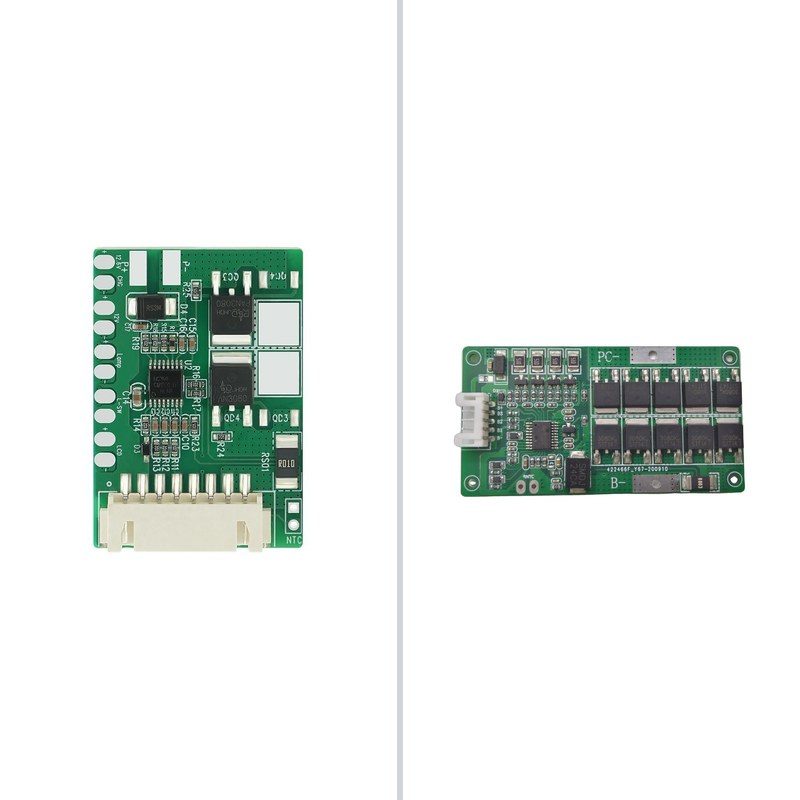
The battery management system is the safety and intelligence layer of every storage battery. QDTB BMS products implement a scalable three-level architecture — cell module (BMU), cluster (BCU) and system/container (BAU) — that samples every cell's voltage, temperature and current, estimates SOC and SOH in real time, and enforces protection against over-charge, over-discharge, over-current, short-circuit and over-temperature. Active or passive balancing keeps cells matched so the pack delivers its full rated energy over thousands of cycles. CAN and RS485/Modbus interfaces relay state to the PCS and energy management system, closing the control loop for safe, efficient operation.
Specifications Range
All specifications and dimensions can be customized upon request
| Key parameters | Model Range |
|---|---|
| Cell Type | LiFePO4 |
| Cells in Series | 8–24 |
| Voltage Accuracy | 3 mV, 2 mV |
| SOC Accuracy | 5 % |
| Balancing | Passive 50~300mA, Active 1~5A |
| Communication | CAN, RS485/Modbus, CAN, RS485/Modbus, Ethernet |
Available Series
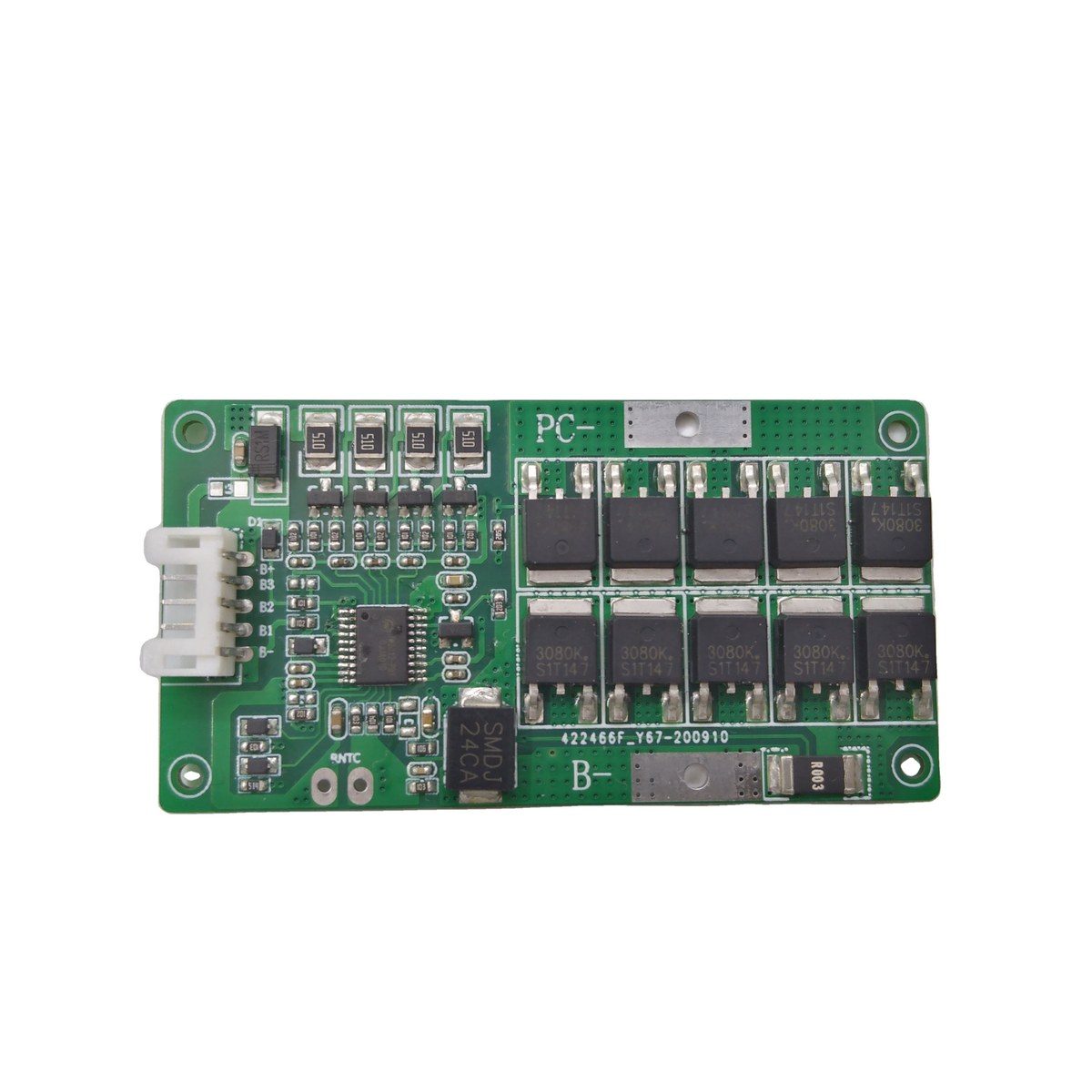
BMS-Home
→BMS-Home Series — Compact Cell Monitoring for Residential Packs
Compact BMS boards monitor 8–16 series LiFePO4 cells in wall-mount and rack-mount home batteries, with SOC estimation and full protection in a small footprint.
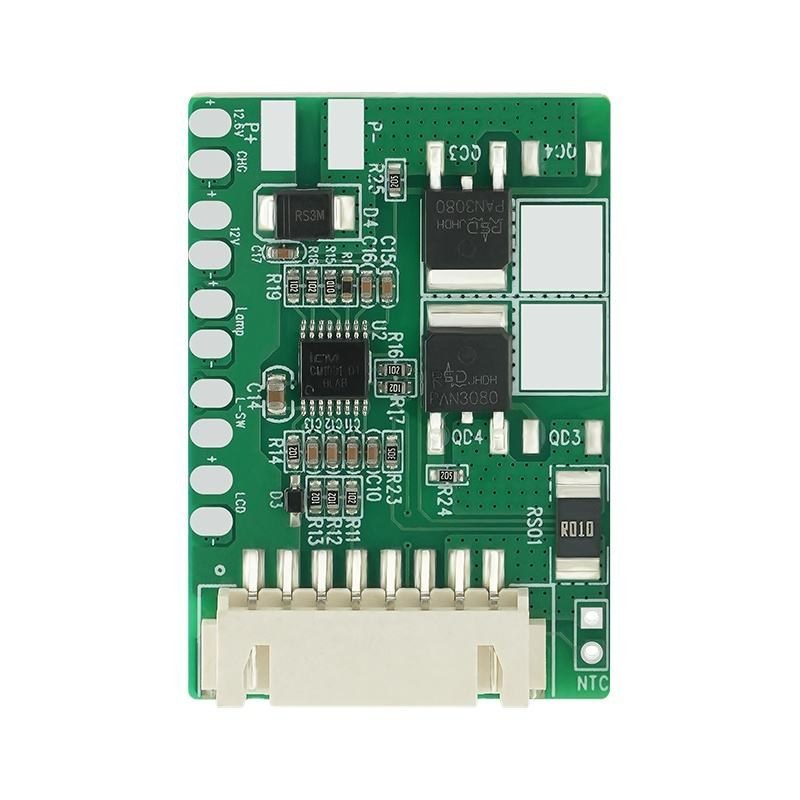
BMS-Cluster
→BMS-Cluster Series — Cluster & System-Level Management
Cluster-level BMS controllers aggregate multiple packs and coordinate with the PCS and EMS, forming the BCU and BAU layers of large storage systems.
Application Scenarios
Residential Batteries
Compact BMS boards that monitor 8–16 series cells in wall-mount home batteries.
Commercial Battery Clusters
Cluster-level controllers that aggregate and balance many packs in a rack or cabinet.
Containerised BESS
Three-level BMS spanning cells, clusters and the whole container for utility-scale safety.
Backup & Telecom
BMS with black-start and UPS functions for critical and telecom batteries.
EV & E-mobility Packs
High-accuracy cell monitoring suited to traction and light-electric-vehicle packs.
Second-Life Batteries
SOH tracking and balancing that extend the useful life of repurposed cells.
Technical Advantages
Three-Level Architecture
BMU / BCU / BAU hierarchy scales cleanly from a single pack to a container of clusters.
High-Accuracy Sampling
Millivolt voltage, percent-grade current and degree-grade temperature measurement per cell.
SOC / SOH Estimation
Adaptive algorithms keep state-of-charge and state-of-health accurate across the cell's life.
Multi-Layer Protection
Hardware and software guards against over-charge, over-discharge, over-current and thermal runaway.
Frequently Asked Questions
What does a BMS actually protect against?
It continuously guards against over-charge, over-discharge, over-current, short-circuit and over-temperature, and isolates the battery before any condition becomes dangerous.
What is the three-level architecture?
BMU monitors individual cells, BCU manages a battery cluster, and BAU coordinates the whole system and exchanges data with the PCS and EMS.
Why is balancing important?
Cell voltages drift over time; balancing equalises them so no single cell limits capacity or over-charges, preserving pack energy and life.
How accurate is the SOC estimate?
Our adaptive estimation typically holds SOC accuracy within a few percent across the full temperature and current range.
What interfaces does the BMS expose?
Standard CAN and RS485/Modbus, plus dry-contact and relay outputs for external protection and signalling.
What is the minimum order quantity (MOQ) for Battery Management Systems (BMS)?
One unit for standard products. Custom-designed equipment is quoted on specifications — send your parameters or drawings and our sales team will confirm the MOQ for your configuration.
Instant Selection & Quote Calculator
Select your specifications to get an estimated price instantly.
More options(5)
Certification
Reference prices are for estimation only and do not constitute a formal offer.
3 · Get this quote
We will reply with your latest quote instantly.
Solar System Configurator
Size your solar array, storage and balance-of-system, and get an instant bill of materials.
Need help?
All specifications and dimensions can be customized upon request
Passive vs Active Balancing vs Centralised BMS: How to Choose
| Passive Balancing BMS | Active Balancing BMS | Centralised BMS | |
|---|---|---|---|
| Balancing method | Excess charge is bled off through a resistor | Charge is moved from stronger cells to weaker ones | One controller serves the whole pack |
| Energy loss | Balancing energy is dissipated as heat | Balancing energy stays in the pack | Depends on the balancing stage fitted |
| Cell monitoring | Every cell sampled for voltage and temperature | Every cell sampled, with balancing current visible | Sampled through a wiring harness to one unit |
| Architecture | Module-level board reporting to a cluster unit | Module-level board with an active balancing stage | One unit for the pack, with fewer boards |
| Protection | Over-charge, over-discharge, over-current, short circuit | The same protection, plus tighter cell matching | Protection centralised in one device |
| Cost | Lowest of the three | Higher, because of the balancing hardware | Lowest for small packs, dearer as the pack grows |
| Typical application | Residential batteries and telecom backup | Commercial clusters and second-life packs | Small packs and e-mobility |
Where QDTB® Battery Management Systems Are Specified
A BMS is specified with every lithium battery, because the chemistry will not forgive an over-charge or a cell that drifts out of step with its neighbours. Residential batteries and commercial clusters use the three-level architecture — cell module, cluster and system — so that the layer that trips protection is as close to the failing cell as possible.
Containerised BESS and utility-scale plants use the system layer to coordinate hundreds of modules and report one state of charge and state of health to the PCS and the energy management system. Without that aggregation the plant operator would be reading cell data instead of running a plant.
Telecom backup, e-mobility packs and second-life batteries use the same protection functions at a smaller scale, with balancing matched to how hard the pack is cycled. Second-life packs in particular need active balancing, because the cells arrive with different histories.
The BMS samples every cell, estimates SOC and SOH in real time, and exposes CAN and RS485/Modbus to the PCS. The protection thresholds and communication map are agreed with the inverter supplier before the battery is shipped, to IEC 62619 and GB/T 34131.
Frequently Asked Questions
What does a BMS actually protect against?
It continuously guards against over-charge, over-discharge, over-current, short-circuit and over-temperature, and isolates the battery before any condition becomes dangerous.
What is the three-level architecture?
BMU monitors individual cells, BCU manages a battery cluster, and BAU coordinates the whole system and exchanges data with the PCS and EMS.
Why is balancing important?
Cell voltages drift over time; balancing equalises them so no single cell limits capacity or over-charges, preserving pack energy and life.
How accurate is the SOC estimate?
Our adaptive estimation typically holds SOC accuracy within a few percent across the full temperature and current range.
What interfaces does the BMS expose?
Standard CAN and RS485/Modbus, plus dry-contact and relay outputs for external protection and signalling.
What is the minimum order quantity (MOQ) for Battery Management Systems (BMS)?
One unit for standard products. Custom-designed equipment is quoted on specifications — send your parameters or drawings and our sales team will confirm the MOQ for your configuration.