Product Search
Find the right transformer for your needs
PCS Power Conversion Systems
2 Product Series · 8 Models available
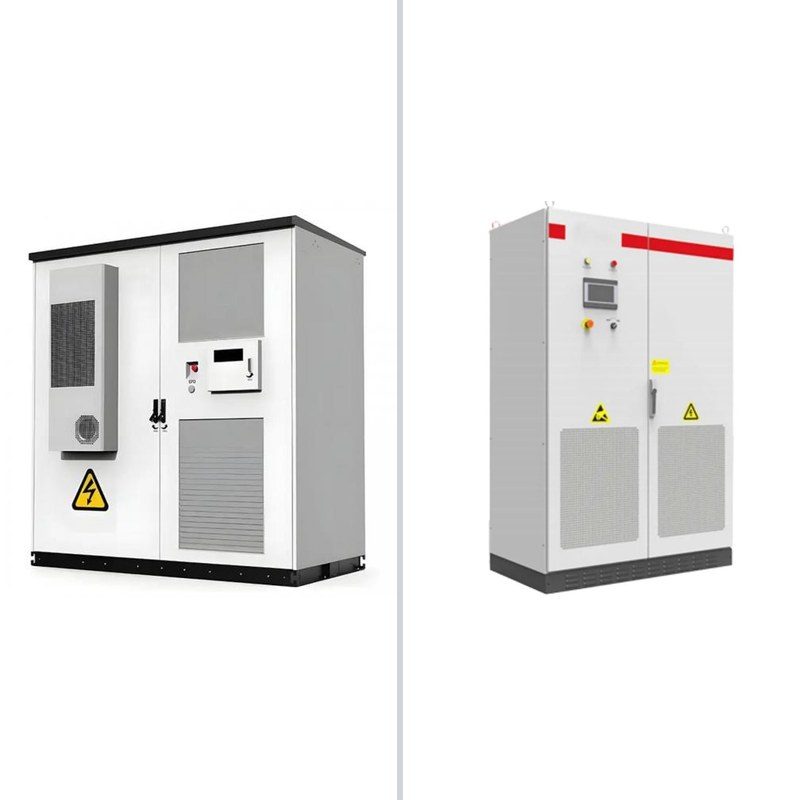
Power conversion systems (PCS) are the bidirectional heart of a storage plant, converting DC from the battery to grid AC for discharge and back again for charging. QDTB PCS units span 5 kW to 500 kW in low-voltage and high-voltage DC platforms, with peak efficiencies above 98 %, fast charge/discharge response and full grid-forming capability. Built-in transfer switches and black-start functions let a storage system ride through outages and rebuild an islanded grid, while standard CAN and Modbus interfaces hand control to the energy management system. They pair directly with our battery clusters and fire-suppression systems to form complete, code-compliant storage solutions.
Specifications Range
All specifications and dimensions can be customized upon request
| Key parameters | Model Range |
|---|---|
| Rated Power | 5–500 kW |
| DC Voltage Range | 150~750, 600~1000, 900~1500 |
| AC Voltage | 380 V, 480 V |
| Max Efficiency | 98–99 % |
| Topology | Two-level bidirectional, Three-level bidirectional |
| Protection Level | IP20, IP54 |
Available Series
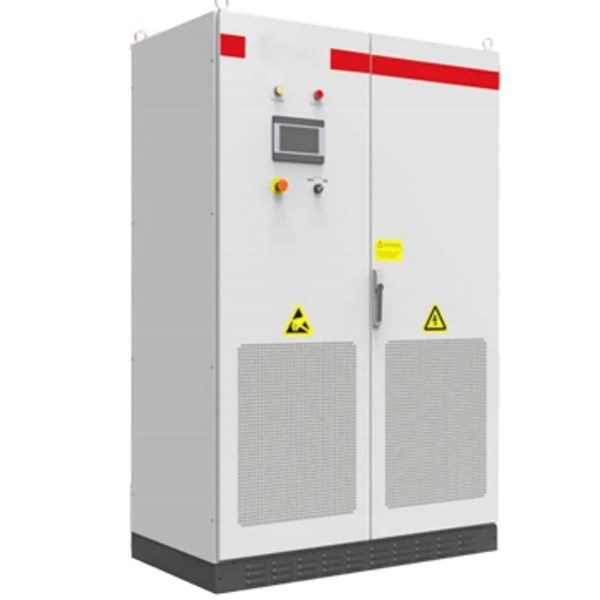
PCS-LV
→PCS-LV Series — Low-Voltage Bidirectional Converters
Low-voltage PCS units from 5 to 50 kW pair with 48 V or low-DC battery banks for residential and small commercial storage, with seamless grid-tie to off-grid transfer.
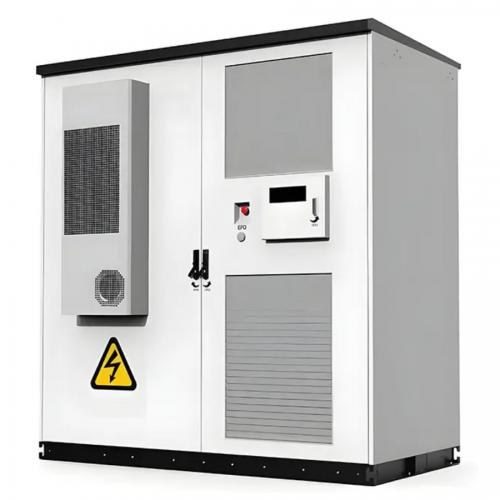
PCS-HV
→PCS-HV Series — High-Voltage Grid-Forming Converters
High-voltage PCS from 50 to 500 kW drive containerised and utility storage, offering high efficiency, fast response and full grid-forming capability.
Application Scenarios
Commercial & Industrial Storage
PCS units sized to the battery cluster for peak-shaving and demand-charge reduction.
Grid Frequency & Peak Regulation
Fast bidirectional response supports frequency regulation and reserve services.
Microgrids & Off-Grid
Grid-forming PCS with black-start keeps an islanded network stable without a utility reference.
Renewable Smoothing
Absorbs short-term PV or wind fluctuations to keep output within grid-code limits.
Containerised BESS
High-power PCS racks integrated with battery clusters inside energy storage containers.
Backup & UPS
Instantaneous switchover supplies critical loads from the battery during grid failure.
Technical Advantages
Bidirectional Conversion
Single unit charges and discharges the battery with controlled AC/DC and DC/AC flow.
Grid-Forming Capability
Black-start and islanding functions rebuild a stable voltage and frequency reference.
98 %+ Peak Efficiency
Low-loss IGBT and SiC power stages minimise round-trip energy loss.
Fast Response
Millisecond-scale power response supports frequency regulation and transient support.
Frequently Asked Questions
How is a PCS different from a grid-tie inverter?
A grid-tie inverter only feeds PV power into the grid; a PCS is bidirectional, charging and discharging a battery, and it can form a grid in off-grid mode.
What is black-start capability?
The ability to energise a de-energised network from the battery without an external grid reference, essential for microgrids and outage recovery.
Which DC voltage platform should I choose?
Low-voltage PCS suits small systems with 48 V or low-DC banks; high-voltage PCS pairs with 750 V+ battery clusters for lower current and higher efficiency.
How fast does the PCS respond?
Power output can ramp within milliseconds, qualifying it for frequency regulation and fast reserve markets.
Can one PCS serve both grid-tie and off-grid modes?
Yes, our PCS switches seamlessly between grid-following and grid-forming operation based on system state.
What is the minimum order quantity (MOQ) for PCS Power Conversion Systems?
One unit for standard products. Custom-designed equipment is quoted on specifications — send your parameters or drawings and our sales team will confirm the MOQ for your configuration.
Instant Selection & Quote Calculator
Select your specifications to get an estimated price instantly.
More options(4)
Certification
Reference prices are for estimation only and do not constitute a formal offer.
3 · Get this quote
We will reply with your latest quote instantly.
Solar System Configurator
Size your solar array, storage and balance-of-system, and get an instant bill of materials.
Need help?
All specifications and dimensions can be customized upon request
Low-Voltage vs High-Voltage vs Containerised PCS: How to Choose
| Low-Voltage PCS (PCS-LV) | High-Voltage PCS (PCS-HV) | Containerised PCS | |
|---|---|---|---|
| DC platform | Low-voltage battery bank, one module per input | High-voltage battery stack in series | Rack after rack combined at the DC bus |
| DC cabling | Thick cable, because the current is high | Thinner cable for the same power | Busbar and rack cabling inside the container |
| Grid role | Grid-following, with grid-forming available | Grid-following and grid-forming with black start | Grid-forming at plant scale, with plant controller |
| Scalability | Units paralleled as the bank grows | Stacks and units paralleled by the EMS | Blocks of capacity added on site |
| Footprint | Wall or rack mounted beside the battery | Floor-standing cabinet near the stack | Dedicated container or station |
| Pairing | Residential and small commercial banks | Commercial and industrial clusters | Utility-scale and microgrid plants |
| Typical application | Backup and self-consumption | Peak shaving and renewable smoothing | Containerised BESS and grid services |
Where QDTB® PCS Units Are Specified
The power conversion system is specified wherever a battery has to move energy in both directions: commercial and industrial storage, grid frequency and peak regulation, microgrids and off-grid systems, and containerised BESS. Because the PCS is bidirectional, one device charges the bank from surplus or off-peak power and discharges it when the site or the grid needs it.
Grid-forming capability and black-start function are what let a storage plant ride through an outage and rebuild an islanded network from the battery alone. That is the difference between a storage system that supports the grid and one that simply follows it, and it is normally the first question a utility asks of a new plant.
Renewable smoothing and backup duties put a premium on response time. The output has to ramp within milliseconds, so the PCS is sized for the ramp rate the plant is contracted to deliver rather than for its average power.
Units span 5 kW to 500 kW in low-voltage and high-voltage DC platforms, with peak efficiencies above 98 %. CAN and Modbus interfaces hand control to the energy management system, and the units are certified to IEC 62477-1 and IEC 62909.
Frequently Asked Questions
How is a PCS different from a grid-tie inverter?
A grid-tie inverter only feeds PV power into the grid; a PCS is bidirectional, charging and discharging a battery, and it can form a grid in off-grid mode.
What is black-start capability?
The ability to energise a de-energised network from the battery without an external grid reference, essential for microgrids and outage recovery.
Which DC voltage platform should I choose?
Low-voltage PCS suits small systems with 48 V or low-DC banks; high-voltage PCS pairs with 750 V+ battery clusters for lower current and higher efficiency.
How fast does the PCS respond?
Power output can ramp within milliseconds, qualifying it for frequency regulation and fast reserve markets.
Can one PCS serve both grid-tie and off-grid modes?
Yes, our PCS switches seamlessly between grid-following and grid-forming operation based on system state.
What is the minimum order quantity (MOQ) for PCS Power Conversion Systems?
One unit for standard products. Custom-designed equipment is quoted on specifications — send your parameters or drawings and our sales team will confirm the MOQ for your configuration.