Product Search
Find the right transformer for your needs
Cables, Trays, Grounding & Fasteners
4 Product Series · 15 Models available
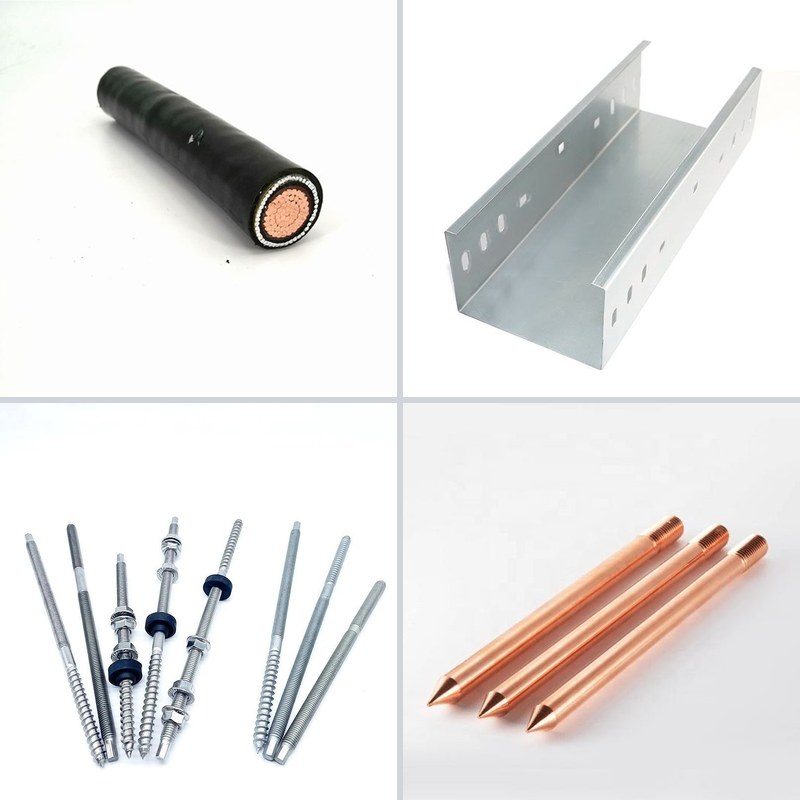
The AC side and the structural grounding of a plant are easy to under-specify, yet they carry every kilowatt to the point of connection and protect both equipment and people from fault current. QDTB supplies XLPE-insulated AC power cables, galvanised cable trays, earthing conductors and stainless fasteners as a matched set. Cables are sized to the inverter output and run length, trays route and support them through the plant, and a low-impedance grounding system bonds frames, arrays and equipment to dissipate lightning and fault current safely. Consistent materials and corrosion protection across the set mean the installation stays safe and serviceable for the plant's full life.
Specifications Range
All specifications and dimensions can be customized upon request
| Key parameters | Model Range |
|---|---|
| Rated Voltage | 0.6 kV |
| Cross-Section | 10 mm², 25 mm², 50 mm², 95 mm², 150 mm², 240 mm² |
| Cable Type | YJV |
| Tray Type | Ladder, Slot, Perforated (tray) |
| Material | Hot-dip galvanized, Galvanized + powder coated, Aluminium alloy |
| Ground Resistance | 4, 10 |
| Grounding Spec | Flat steel 40×4mm, Flat steel 50×5mm, Round steel Φ10~Φ12mm |
| Fastener Material | Stainless steel 304, Stainless steel 316, Hot-dip galvanized |
| Type | AC cable, Cable tray, Grounding, Fastener |
| Key Spec | 10 mm² · 0.6 kV, 25 mm² · 0.6 kV, 50 mm² · 0.6 kV, 95 mm² · 0.6 kV, 150 mm² · 0.6 kV, 240 mm² · 0.6 kV… |
| Standard | GB/T 12706, JB/T 10216, GB 50168, GB/T 3098.6 |
Available Series
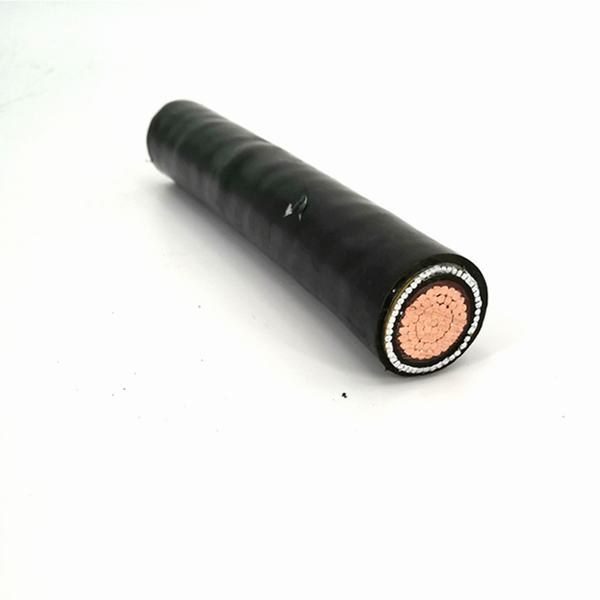
AC-Cable
→AC-Cable Series — XLPE Power Cables
XLPE-insulated 0.6/1 kV power cables carrying inverter output to switchboards and the grid connection point.
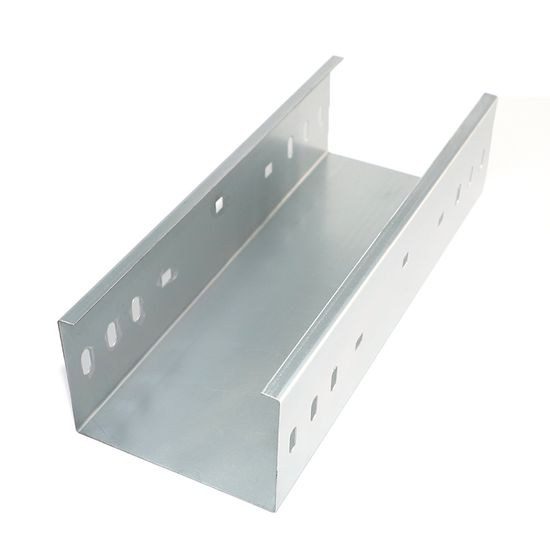
Cable-Tray
→Cable-Tray Series — Galvanised Routing Systems
Hot-dip galvanised cable trays that support and organise power and signal cables through the plant for decades of service.
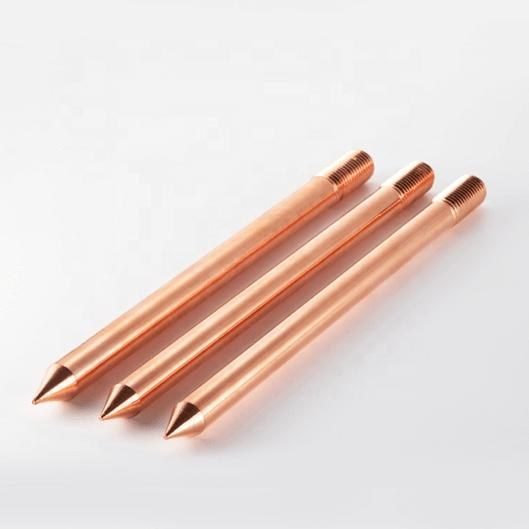
Grounding
→Grounding Series — Earthing Conductors & Rods
Earthing conductors, clamps and rods that bond arrays, frames and equipment to a low-impedance earth for lightning and fault safety.
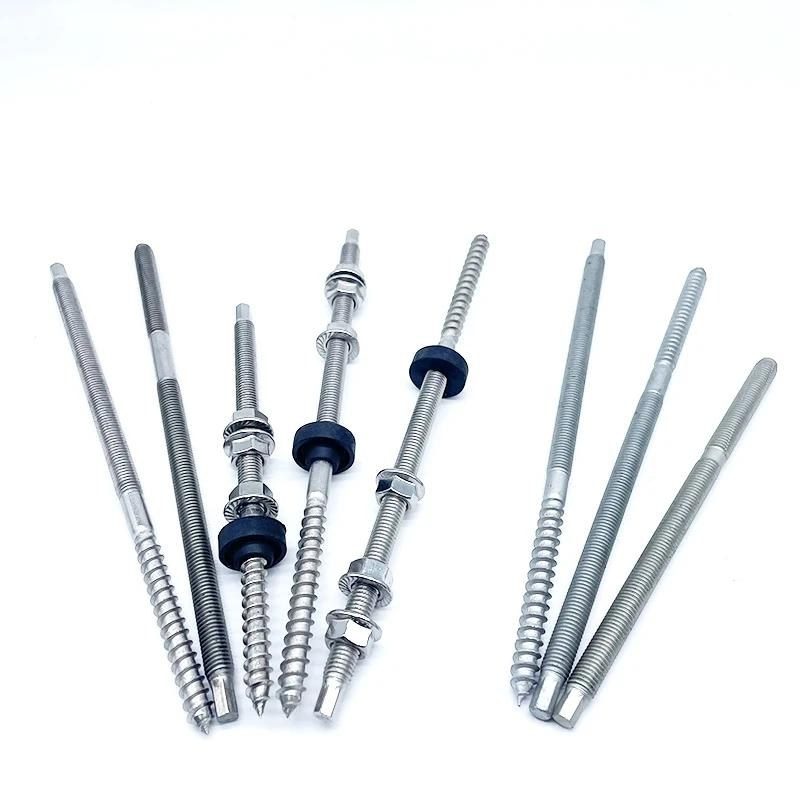
Fastener
→Fastener Series — Stainless Mounting Hardware
A2/A4 stainless fasteners for structures, trays and equipment that resist corrosion in outdoor and coastal environments.
Application Scenarios
AC Power Distribution
XLPE cables carrying inverter output to switchboards and the point of grid connection.
Cable Routing
Galvanised trays support and organise power and signal cables through the plant.
Lightning & Fault Grounding
Earthing conductors and rods bond equipment to a low-impedance earth for safety.
Array Earthing
Module frames and racks bonded together to prevent potential differences and lightning damage.
Fastening & Assembly
Corrosion-resistant stainless fasteners for structures, trays and equipment.
Harsh Outdoor Installations
Galvanised and stainless materials for coastal, industrial and high-humidity sites.
Technical Advantages
XLPE-Insulated Cables
0.6/1 kV YJV power cables with excellent thermal and dielectric performance.
Hot-Dip Galvanised Trays
Corrosion-resistant trays rated for decades of indoor and outdoor service.
Low-Impedance Grounding
Conductors and rods sized to clear fault current and dissipate lightning safely.
Stainless Fasteners
A2/A4-grade stainless hardware that resists corrosion in aggressive atmospheres.
Frequently Asked Questions
What cable size do I need for the AC side?
The cross-section depends on the inverter output current and run length; it must keep voltage drop within code limits and match the upstream breaker rating.
Tray or conduit — which is better?
Trays suit multi-cable runs and simplify maintenance and expansion; conduit offers mechanical protection where the run is exposed or buried.
Why is grounding critical in a PV plant?
A low-impedance earth dissipates lightning and fault current, protects against electric shock and prevents damage to inverters and electronics.
What material is best for fasteners?
Stainless steel (A2/A4) resists corrosion in outdoor and coastal environments, avoiding seized or rusted fixings over the plant's life.
Can you supply the complete grounding set?
Yes, earthing conductors, clamps, rods and bonding hardware are supplied together for a consistent, compliant installation.
What is the minimum order quantity (MOQ) for Cables, Trays, Grounding & Fasteners?
One unit for standard products. Custom-designed equipment is quoted on specifications — send your parameters or drawings and our sales team will confirm the MOQ for your configuration.
Instant Selection & Quote Calculator
Select your specifications to get an estimated price instantly.
More options(4)
Certification
Reference prices are for estimation only and do not constitute a formal offer.
3 · Get this quote
We will reply with your latest quote instantly.
Solar System Configurator
Size your solar array, storage and balance-of-system, and get an instant bill of materials.
Need help?
All specifications and dimensions can be customized upon request
Cable Tray vs Conduit vs Direct Burial: How to Choose
| Cable Tray | Conduit | Direct Burial | |
|---|---|---|---|
| Routing | Open support for multi-cable runs along racks and walls | Closed raceway that follows a fixed path | Cable laid in a trench with sand and warning tape |
| Mechanical protection | Moderate, unless a covered tray is specified | High, which is why it is used in plant and public areas | Low, and hard to inspect once backfilled |
| Maintenance & expansion | Cables visible and easy to add or replace | Pull-in and pull-out through the raceway | Re-excavation needed for any change |
| Heat dissipation | Strongest, because the cables sit in open air | Poor, so the grouping factor derates the cable | Moderate, set by soil thermal resistivity |
| Corrosion exposure | Galvanised finish for outdoor and coastal runs | Depends on the conduit material | Protected by the backfill, but moisture stays |
| Cost | Moderate, and the least expensive to extend | Higher per metre of cable carried | Lowest material cost, highest earthworks cost |
| Typical use | Array, inverter and plant-room cable runs | Exposed walls, plant rooms and public areas | Long runs between distant plant areas |
Where QDTB® Cables, Trays & Grounding Are Specified
The AC side of a plant is where the specification is easiest to cut and most expensive to get wrong, because those cables carry every kilowatt to the point of connection. XLPE-insulated cable is sized to the inverter output and the run length, keeping voltage drop inside the limit the inverter can tolerate at full output.
Cable trays route and support those runs through the plant, and a galvanised tray is specified wherever the route is outdoors or near the coast. On rooftop and ground-mount arrays the tray also sets how easily a string can be added later, which is why maintenance access is part of the routing decision rather than an afterthought.
Grounding is the part that protects people rather than production: a low-impedance earth bonds frames, arrays and equipment so that lightning and fault current dissipate without raising the potential of touchable metal. Earthing conductors, clamps, rods and bonding hardware are supplied as one set, because a grounding system assembled from mismatched parts is where the resistance creeps in.
Fasteners are stainless A2 or A4 for the same reason: a galvanised bolt in an aluminium rail is the start of a corrosion cell that loosens the array over a decade. The set follows GB/T 12706 for cable, JB/T 10216 for tray and GB 50168 for installation.
Frequently Asked Questions
What cable size do I need for the AC side?
The cross-section depends on the inverter output current and run length; it must keep voltage drop within code limits and match the upstream breaker rating.
Tray or conduit — which is better?
Trays suit multi-cable runs and simplify maintenance and expansion; conduit offers mechanical protection where the run is exposed or buried.
Why is grounding critical in a PV plant?
A low-impedance earth dissipates lightning and fault current, protects against electric shock and prevents damage to inverters and electronics.
What material is best for fasteners?
Stainless steel (A2/A4) resists corrosion in outdoor and coastal environments, avoiding seized or rusted fixings over the plant's life.
Can you supply the complete grounding set?
Yes, earthing conductors, clamps, rods and bonding hardware are supplied together for a consistent, compliant installation.
What is the minimum order quantity (MOQ) for Cables, Trays, Grounding & Fasteners?
One unit for standard products. Custom-designed equipment is quoted on specifications — send your parameters or drawings and our sales team will confirm the MOQ for your configuration.