Product Search
Find the right transformer for your needs
SVG & SVC Static Var Compensation
2 Series · 13 Models
Product Images

Images are for illustration purposes only
SVG & SVC Static Var Compensation Overview
Static Var Generator (SVG) and Static Var Compensator (SVC) systems provide dynamic reactive power compensation, power factor correction and voltage stabilization for power networks. QDTB SVG/SVC systems are rated ±1–15 Mvar at 10 kV or 35 kV, with SVG delivering IGBT-based stepless compensation in under 5 ms and SVC offering mature thyristor-controlled reactor technology for utility substations and heavy industry.
Available Series
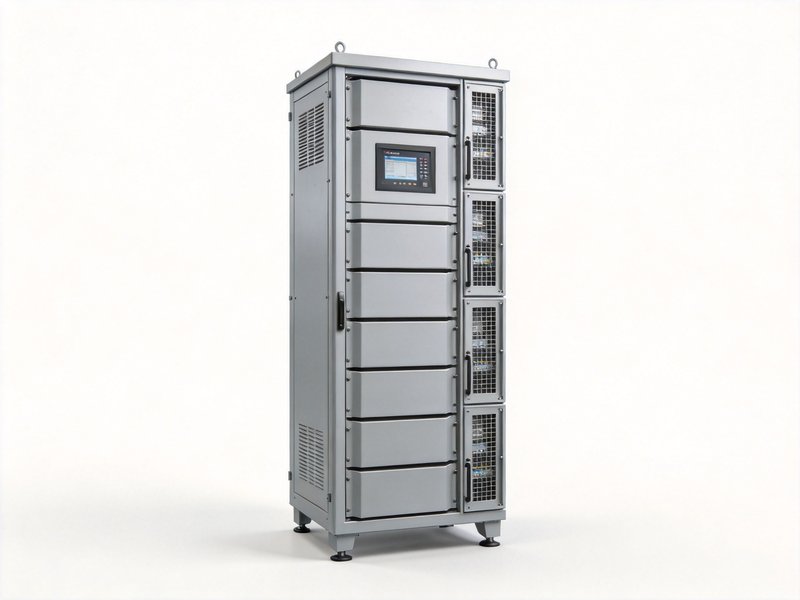
SVG Series
The SVG (Static Var Generator) uses voltage-source IGBT inverters to inject or absorb reactive power continuously and dynamically. Rated ±1–15 Mvar at 10 kV or 35 kV with a response time under 5 ms, it corrects power factor, suppresses voltage fluctuation and mitigates three-phase unbalance caused by fluctuating loads such as electric arc furnaces, welding machines and motor drives.
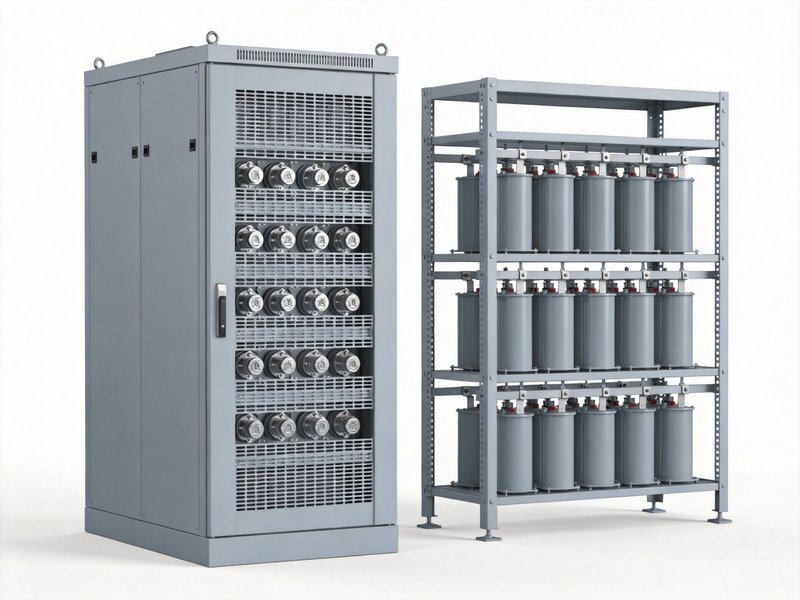
SVC Series
The SVC (Static Var Compensator) combines thyristor-controlled reactors (TCR) with fixed or mechanically-switched capacitor banks to provide continuous reactive power compensation. Rated up to ±15 Mvar at 10 kV or 35 kV, it stabilizes system voltage and improves power factor in utility substations and heavy industrial networks, with thyristor phase-angle control for fast, reliable output adjustment.
Instant Selection & Quote Calculator
Select your specifications to get an estimated price instantly.
More options(3)
Certification
Reference prices are for estimation only and do not constitute a formal offer.
3 · Get this quote
We will reply with your latest quote instantly.
Related Engineering Calculators
Free sizing and pricing tools for this product category.
Application Scenarios
Utility Substations
Voltage stabilization and reactive power support for transmission and distribution substations with fluctuating load.
Steel Mills & Arc Furnaces
Millisecond-level compensation for electric arc furnace flicker and reactive power swings.
Wind & Solar Plants
Grid-interconnection reactive support to meet grid-code power factor requirements.
Industrial Parks
Central compensation for motor and variable-frequency-drive reactive load.
Technical Advantages
IGBT SVG Technology
Stepless, millisecond-level reactive compensation with minimal harmonics.
Thyristor-Controlled SVC
Mature, cost-effective continuous compensation for large ratings.
±1–15 Mvar Range
Scalable compensation from small industrial units to substation-class systems.
10 kV / 35 kV Networks
Medium-voltage design for distribution and industrial applications.
FAQ - SVG & SVC Static Var Compensation
What is reactive power compensation?
What is the difference between SVG and SVC?
How do I choose between SVG and SVC?
Can these systems operate at 35 kV?
What is the minimum order quantity (MOQ) for SVG & SVC Static Var Compensation?
What is the delivery time for SVG & SVC Static Var Compensation?
Related Product Categories
Dry Type Transformers
Dry-type transformers are essential components in modern ele
Oil Immersed Transformers
Oil-immersed transformers are the workhorse of power distrib
Special Isolation Control Transformers
Isolation and control transformers provide galvanic separati
Amorphous Alloy Transformers
Amorphous alloy transformers are the lowest-loss choice for
Box Type Substations
Box-type substations, also known as prefabricated substation
Reactors
Reactors are inductive components that shape power quality b
Cable Branch Boxes
Cable branch boxes are sealed distribution points that split
Ring Main Units
Ring main units (RMUs) are compact, sealed switchgear that f
High Voltage Switchgear
High-voltage switchgear performs switching, protection, and
Low Voltage Switchgear
Low-voltage switchgear and motor control centers (MCCs) deli
Single Phase Transformers
Single-phase control transformers provide galvanic isolation
Three Phase Transformers
Three-phase dry-type transformers step down, isolate, or ada
Voltage Regulators
Automatic voltage regulators (stabilizers) keep output volta
Variable Transformers
Variable auto-transformers deliver continuous, stepless AC v
Inverters
Pure sine wave inverters convert DC battery power (12 V/24 V
Dc Power Supplies
Switching DC power supplies convert AC mains into regulated
Battery Chargers
Intelligent battery chargers restore and maintain lead-acid
Motor Starters
Motor starters control three-phase motor energization with r
Ups
Online double-conversion UPS systems continuously regenerate
Power Capacitors
Self-healing power capacitors provide power factor correctio
Solar Pv Modules
Solar PV modules convert sunlight into direct current and ar
String Inverters
String grid-tie inverters turn the DC output of PV modules i
Hybrid Inverters
Hybrid solar inverters combine a grid-tie inverter and a bat
Energy Storage Batteries
Energy storage batteries store surplus solar or off-peak pow
Pcs Energy Storage
Power conversion systems (PCS) are the bidirectional heart o
Battery Management Systems
The battery management system is the safety and intelligence
Ess Fire Suppression
Fire suppression for energy storage must act in the seconds
Pv Mounting Structures
Mounting structures hold the array to the roof or ground for
Dc Cables Connectors Spd
The DC side of a PV plant is only as reliable as the cables,
Monitoring Scada Communication
A solar or storage plant that cannot be observed and control
Cables Trays Grounding
The AC side and the structural grounding of a plant are easy
Energy Storage Containers
The energy storage container packages battery, power convers
Busway
Busway (bus duct) systems distribute high-current power from
Ev Charging Stations
EV charging stations supply electric vehicles with AC Level
Pole Mounted Switchgear
Pole-mounted switchgear provides outdoor switching, protecti
Active Harmonic Filters
Active Harmonic Filters (APF), also called active power filt
Ats Transfer Switches
Automatic Transfer Switches (ATS) automatically transfer the
Diesel Generators
Diesel generator sets provide reliable prime or standby powe
Eps Emergency Power
EPS (Emergency Power Supply) systems provide battery-backed
Wind Turbines
QDTB onshore wind turbines span the 2 MW, 3 MW and 5 MW clas
Scada Automation
Substation SCADA and secondary automation equipment for MV/L
American Pad Mounted Transformers
American pad-mounted transformers (ZGS series) place a 12 kV
Related Solutions
Need help?
All specifications and dimensions can be customized upon request
IGBT-Based SVG vs Thyristor SVC vs Capacitor Bank: How to Choose
| IGBT-Based SVG | Thyristor SVC | Capacitor Bank | |
|---|---|---|---|
| Response | Stepless compensation in under 5 ms | Thyristor switching, fast but discrete | Switched in steps, so the response is set by the contactor |
| Output range | Continuous from full inductive to full capacitive | Continuous within the TCR range, with fixed capacitors | Fixed steps of reactive power only |
| Harmonic behaviour | Actively filters, so it can reduce distortion | TCR generates harmonics that need filters | Plain capacitors can amplify existing harmonics |
| Footprint | Compact, since no large reactor bank is needed | Large, dominated by the reactors and capacitors | Moderate, but needs a detuning reactor in harmonic-rich plants |
| Range | Small to medium Mvar ratings | Medium to large Mvar ratings | Small ratings, in banks of units |
| Cost | Highest per Mvar | Lower per Mvar at large ratings | Lowest per Mvar |
| Typical application | Arc furnaces, wind and solar plants, weak grids | Utility substations and heavy industry | Steady industrial loads and motor compensation |
Where QDTB® SVG & SVC Systems Are Specified
Static compensation is specified where the reactive demand moves faster than a switched bank can follow: steel mills and arc furnaces, utility substations on a weak network, and wind or solar plants whose output changes with the weather. The device holds voltage and power factor through those swings instead of correcting after the fact.
An IGBT-based SVG gives stepless output in under 5 ms and can also filter, which is why it is chosen where flicker, harmonic distortion or a weak short-circuit level are the problem. The thyristor-controlled SVC remains the practical choice for large Mvar ratings where the slower response is acceptable and the cost per Mvar matters.
Industrial parks and heavy-industry plants use the same systems to keep the power factor at the point of common coupling inside the utility's limit. Compensating locally also releases transformer and feeder capacity that reactive current was occupying.
Systems are rated ±1-15 Mvar at 10 kV or 35 kV, to GB/T 15576 and IEC 61954. Where power quality has to be demonstrated to the utility, measurement follows IEC 61000-4-30 practice.
Frequently Asked Questions
What is reactive power compensation?
Reactive power is needed to maintain voltage but does no useful work. Compensation devices supply reactive power locally to improve power factor, reduce line losses and stabilize voltage.
What is the difference between SVG and SVC?
SVG uses IGBT inverters for stepless compensation in under 5 ms, while SVC uses thyristor-controlled reactors and capacitors for continuous, cost-effective compensation at very large ratings.
How do I choose between SVG and SVC?
SVG is preferred where fast response, low harmonic generation and compact footprint matter; SVC is chosen for large utility ratings and mature, low-cost technology.
Can these systems operate at 35 kV?
Yes, SVG and SVC systems are commonly supplied for both 10 kV and 35 kV networks, with configurations matched to the installation voltage.
What is the minimum order quantity (MOQ) for SVG & SVC Static Var Compensation?
One unit for standard products. Custom-designed equipment is quoted on specifications — send your parameters or drawings and our sales team will confirm the MOQ for your configuration.
What is the delivery time for SVG & SVC Static Var Compensation?
Standard units are delivered in 30-45 days. Custom or large-capacity units follow a project-specific schedule confirmed at quotation. Rush orders can be accommodated for urgent projects.